Ecommerce inventory management software
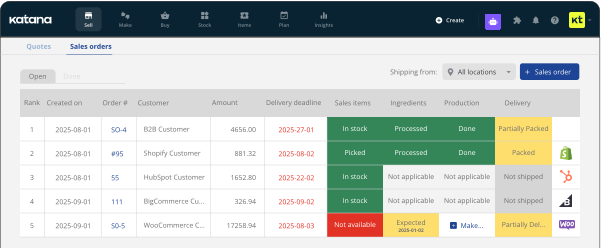
Sell on Shopify, Amazon, WooCommerce, and wholesale — with one inventory pool that stays accurate everywhere. Katana syncs stock in real time across every channel, automates reordering, and handles fulfillment from one platform.














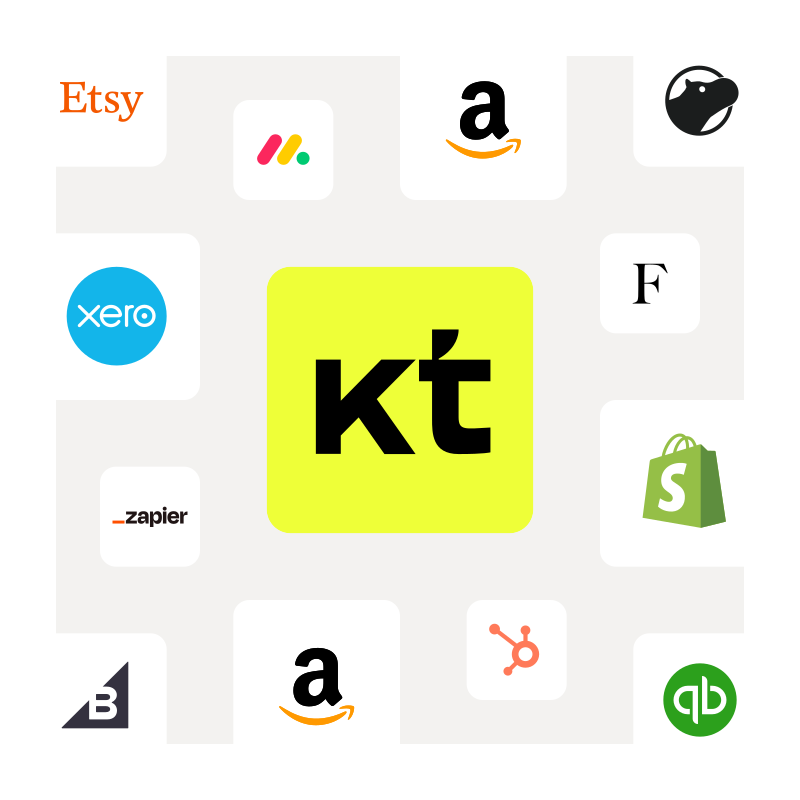
Connects with your sales channels
Ecommerce inventory management software syncs stock levels across online sales channels in real time, preventing overselling and stockouts. When a sale happens on Shopify, Amazon, or any connected channel, inventory adjusts across all platforms within seconds. Solutions like Katana go beyond basic stock sync — offering automated reorder points, multichannel order management, warehouse fulfillment tools, and native integrations with major ecommerce platforms.
Integration logo slider or Image











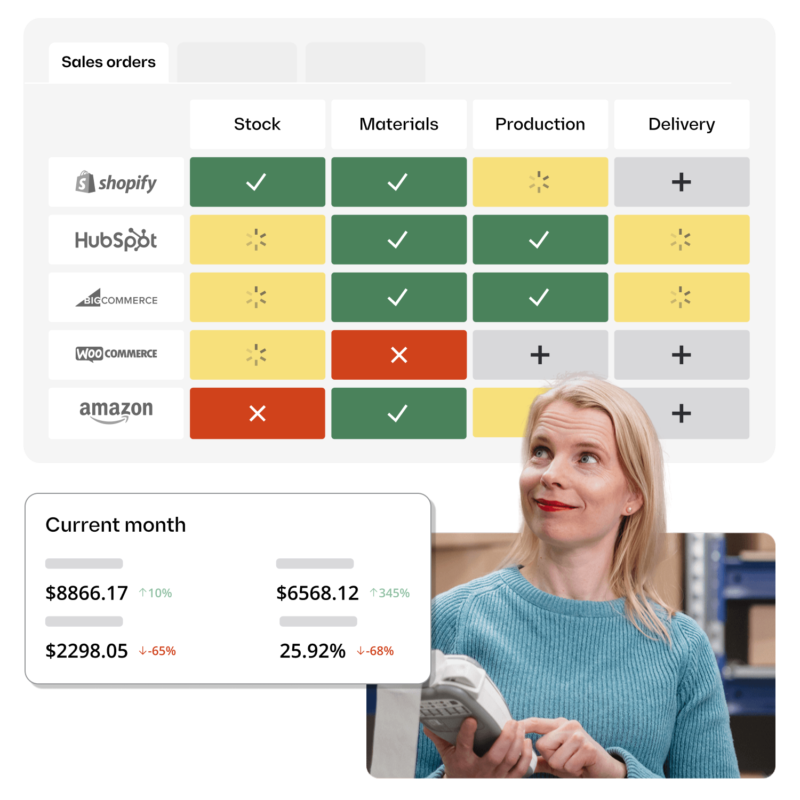
One stock count, every channel
Shopify, Amazon, WooCommerce, and your wholesale channel all pull from one inventory pool. When a sale happens anywhere, stock updates everywhere in seconds.
No more overselling
Real-time sync means if you have 50 units, every channel knows it. No more selling products you don’t have and emailing customers apologies.
Automated reordering
Set reorder points per product. When stock drops below the threshold, Katana alerts your team and can auto-generate purchase orders to your supplier.
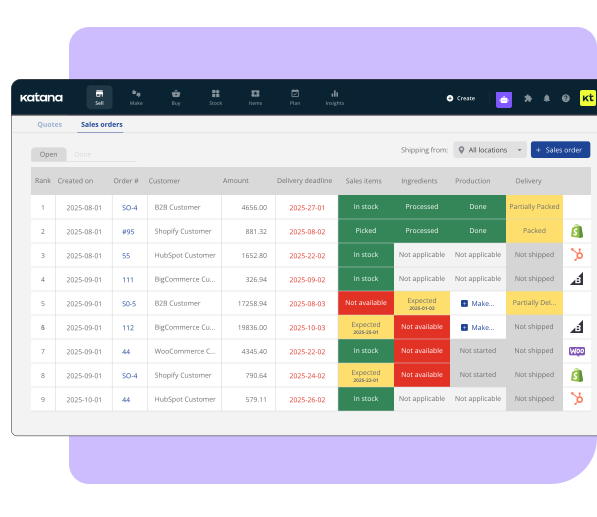
Every order, every channel, one dashboard
When a customer orders on Shopify at 2 AM, it shouldn’t take until 9 AM for your stock to reflect it. Katana auto-imports orders from every connected channel and adjusts inventory immediately — so you never oversell and your team starts each day with accurate stock and a clear fulfillment queue.
“We use Shopify for D2C, TikTok Shop, Target Plus, Gap.com — all of those sales orders can be pulled into our platform in real time.”
— Katana product specialist
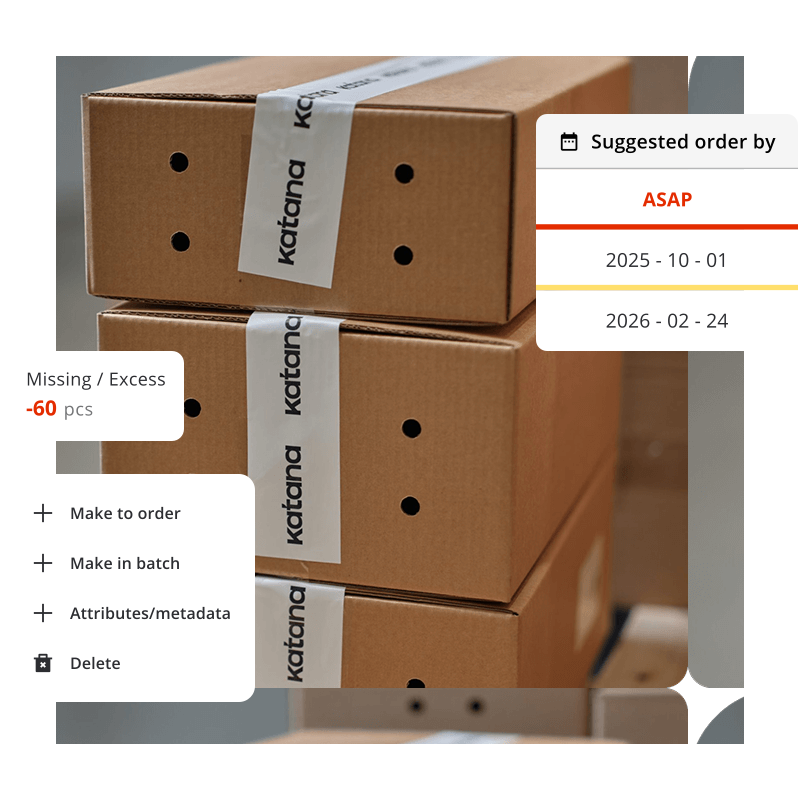
D2C + wholesale from one inventory pool
Most ecommerce brands that grow into wholesale hit the same wall: Shopify manages the online store, but wholesale orders live in spreadsheets or a separate system. Inventory gets split, overselling happens, and fulfillment becomes a guessing game.
Katana manages both channels from a single inventory pool:
- D2C orders from Shopify, Amazon, and WooCommerce — auto-imported
- B2B/wholesale orders entered directly or via API integration
- One stock count shared across all channels — no double-selling
- Prioritize fulfillment by channel, margin, or due date
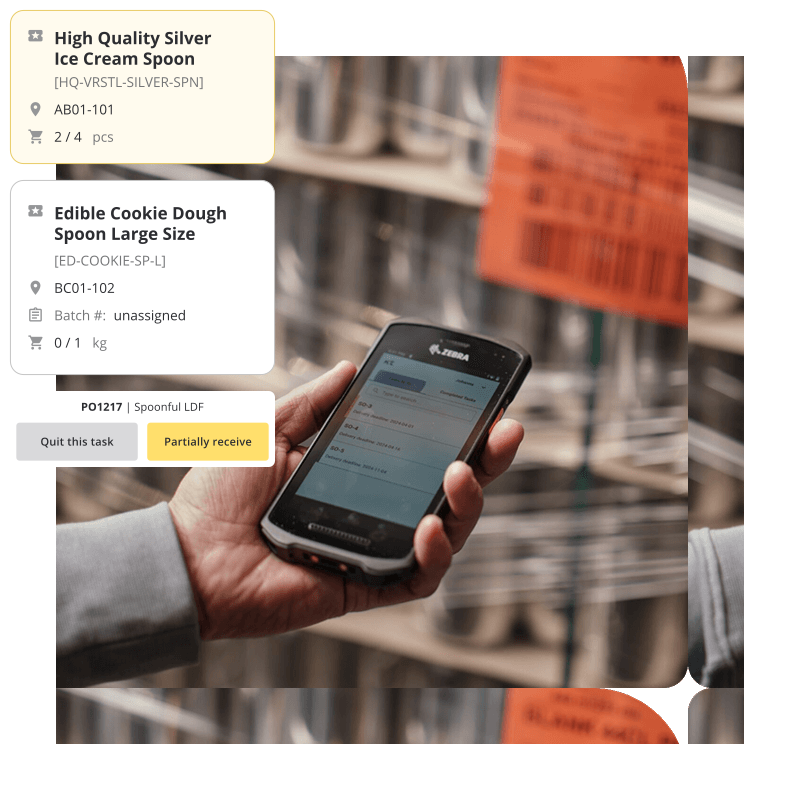
Fulfillment that syncs back to your store
When your warehouse team picks, packs, and ships an order in Katana, the fulfillment status and tracking number push back to Shopify automatically. Your customer gets their shipping notification without you touching the Shopify admin.
- Pack and ship from Katana’s warehouse interface
- Tracking numbers auto-synced to Shopify, WooCommerce, Amazon
- Inventory levels adjust immediately upon shipment
- Returns and adjustments flow back into stock counts
Selling on multiple channels with separate inventory counts?
Katana unifies your stock across Shopify, Amazon, WooCommerce, and wholesale — with real-time sync, automated reordering, and one dashboard for everything.
The ecommerce manufacturer’s tech stack
Instead of stitching together 5 separate tools, Katana centralizes inventory for brands that make and sell:
Function
Without Katana
With Katana
D2C sales
Shopify (inventory separate)
Shopify → auto-synced to Katana
B2B wholesale
Spreadsheet or separate tool
Same system, same stock pool
Production planning
Whiteboards or manual scheduling
Auto-scheduled based on orders + materials
Raw material tracking
Separate spreadsheet
BOM-linked, auto-deducting
Accounting
QuickBooks / Xero
Integrated via native sync
Explore Katana’s inventory capabilities
Frequently asked questions
The best ecommerce inventory management software syncs stock across all your sales channels in real time, prevents overselling, automates reordering, and handles fulfillment from one system. Katana integrates natively with Shopify, Amazon, WooCommerce, and BigCommerce — with a free plan and unlimited users.
Yes. Katana has a native Shopify integration that syncs orders and inventory in real time. When a customer places an order on Shopify, it automatically appears in Katana. When you fulfill an order, the status and tracking push back to Shopify automatically.
Yes. Katana manages both D2C channels like Shopify and B2B wholesale orders from a single inventory pool. Stock levels stay accurate across all channels, and you can prioritize fulfillment based on order type, due date, or channel.
When a sale happens on any connected channel — Shopify, Amazon, WooCommerce, or wholesale — Katana adjusts stock levels across all channels within seconds. This means if you have 50 units and someone buys 1 on Amazon, all other channels immediately show 49 units available, preventing overselling.
Stop managing inventory channel by channel
Start free with Katana. Sync Shopify, Amazon, and wholesale inventory from one platform — with real-time stock updates, automated reordering, and no per-user fees.