How Nooma implemented
real-time inventory management in two hours
Nooma makes organic sports and energy drinks and sells them through DTC, wholesale, Amazon, and retail. After a $3,000 ordering mistake on another system, Nooma came back to Katana, where purchase orders now check real stock and one co-founder runs ops without extra hires.
2 hours
Time to go live
One system
across DTC, wholesale, Amazon, and retail

Website
Integrations
Shopify, Amazon FBA, Amazon FBM
Industry
Food & beverage
Location
Cleveland, OH
About Nooma
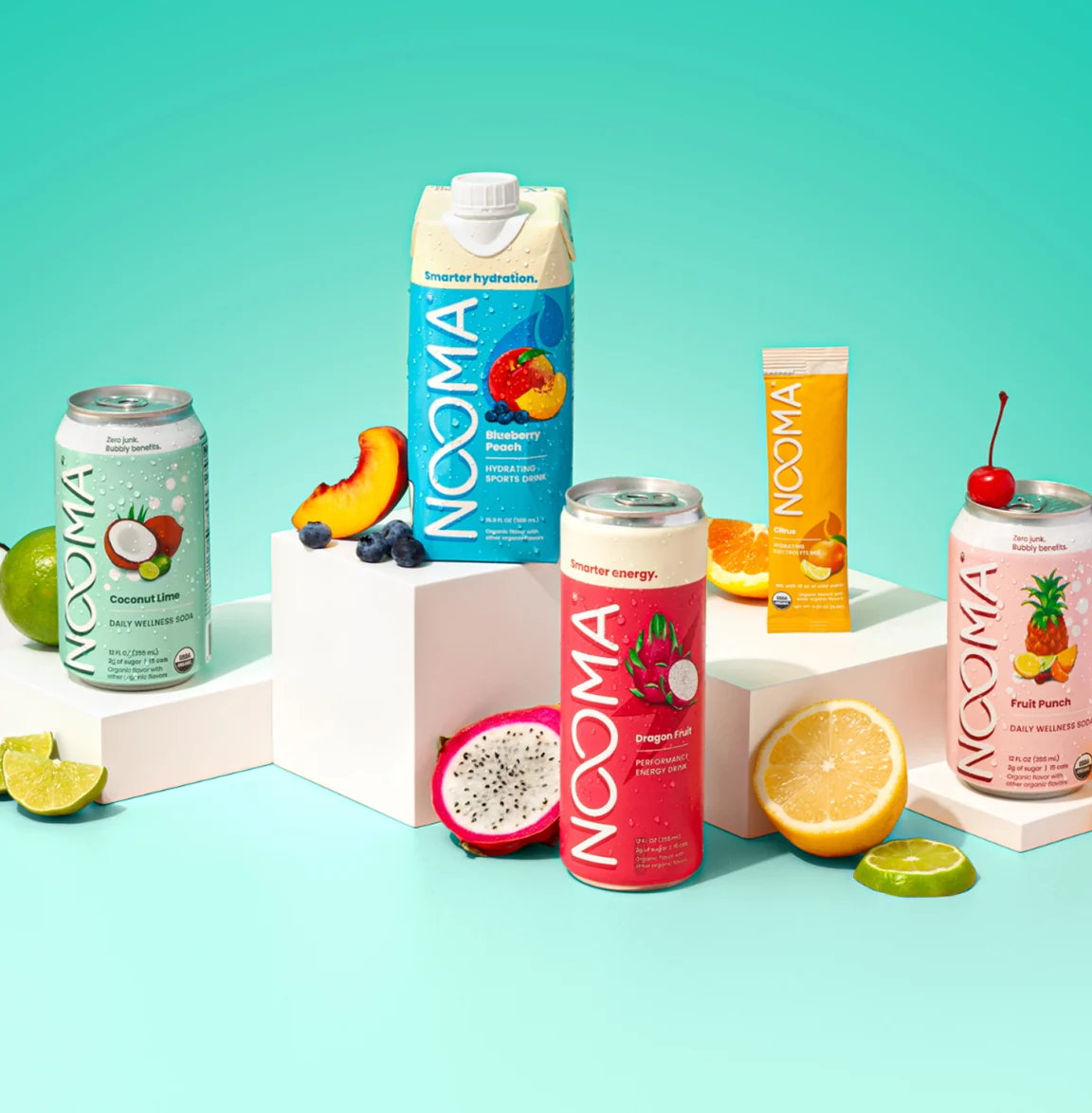
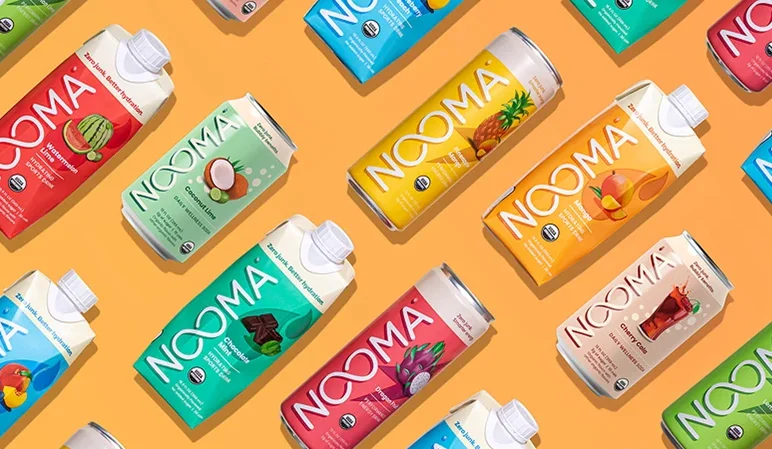
Nooma makes organic, ready-to-drink sports and energy drinks. They sell across four main channels: a direct-to-consumer Shopify store; a separate wholesale Shopify store for resellers like gyms, yoga studios, CrossFit locations, and cafes; Amazon (both FBA and FBM); and traditional retail through partners like UNFI. The two Shopify stores make up about half of Nooma’s revenue, Amazon about a third, and retail the rest. Instead of asking yoga studios to reorder each month, Nooma sets them up to automatically receive a set number of cases on a schedule that matches their needs.
Production is fully outsourced to two co-packers, one per product line. Brandon Smith, Nooma’s co-founder, manages finance and operations mostly on his own: procuring ingredients, forecasting cash and demand, and tracking seasonality across every channel.
A costly mixup brings Nooma
back to Katana
Nooma used Katana for three years before switching to a different inventory system as the company grew its ecommerce business, chasing better Amazon integration. The new system didn’t solve the main issue: it couldn’t connect purchase orders to bills of materials. It had no way to show what was already in stock before creating a purchase order, even for ingredients used in different product lines and by co-packers. To keep things on track, Brandon had to use a separate spreadsheet to double-check every order before sending it out.
Something that should take you two clicks took you seventeen. Inventory transfers had you setting up a separate sales channel for every move. There was always this phantom, ghost inventory stuck in some state that needed a couple more clicks to finally push through.
Brandon Smith, Co-Founder at Nooma
That blind spot caught up with Nooma in Q1 2026. Two of its formulas use different lime flavors, each approved for only one product line. Brandon built a PO by hand without a system checking the BOM and ordered the wrong one. The mistake cost the business about $3,000 in unusable liquid.
A typo is my problem, but when you’re monitoring that many things, you need a system that helps you avoid them. Now I trust it. I know the BOM is set up correctly, so when it generates a PO off that BOM, I don’t have anything to worry about.
Back up and running in two hours
Getting Nooma’s account, Bill of materials (BOMs), suppliers, lead times, locations, and co-packers set up again in Katana took about two hours. Connecting sales channels took a few clicks.
I was hoping Katana would eventually get to the things that were making my process difficult elsewhere. Now it makes everything so much cleaner, and I’m super happy to be back.
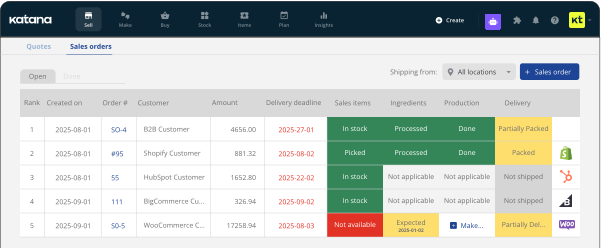
Katana now tracks shared ingredients across both of Nooma’s co-packers as one shared pool, and manufacturing orders reflect what’s already in stock before Brandon places a purchase order. If Nooma needs a certain amount of a flavor for an upcoming run, Katana checks that across both co-packers before the PO goes out. Brandon no longer has to track it by hand. On the Amazon side, orders sync and update automatically, so there’s no more clicking through each one.
On the other system, it was a pain going in every day and manually clicking ship, ship, ship, ship. It’s a lot easier now to trust the accuracy of what’s going on.
Nooma also recently connected Amazon FBM as a flexible backup to FBA. About 99% of Amazon orders still ship through FBA, but when stock is tight or still in transit, Brandon switches a SKU to FBM so he can keep selling without committing inventory that would otherwise fill higher-margin DTC orders. Nooma nets meaningfully more per case direct to consumer than through Amazon FBA, so it’s important to protect DTC inventory during months when stock is tight.
Staying ahead of Amazon inventory
Brandon checks Amazon’s FBA inventory page every day and keeps an eye on days-on-hand for each SKU. Since it takes about two weeks to prepare and another two weeks before new stock is checked in at Amazon’s warehouse, he uses the 45 to 60 day mark as his cue to start a replenishment order with the 3PL. From there, he rounds up to full pallets and lines up the timing with Nooma’s variety pack production, which runs on a four to six week made-to-stock cycle. It’s not an exact science. Amazon’s own transit and check-in times can change a shipment’s availability by weeks, so Brandon always adds a buffer to avoid a stockout.
If you only have a little bit of inventory, sell it for as much money as you can. It’s a pretty simple concept, but you need to actually see what you have to be able to act on it.
Results
Fewer mistakes, no added headcount
- No more manual BOM cross-checks. Purchase orders reflect real on-hand inventory across both co-packers, closing the gap that led to the Q1 2026 ordering mistake.
- Amazon orders update on their own. No more daily manual clicking through order statuses.
- Basic tasks stay basic. Inventory transfers and receiving that took many extra steps on Nooma’s previous system are back to a couple of clicks, with no more phantom inventory stuck mid-process.
- A flexible buffer on Amazon. FBM gives Nooma a way to keep selling on Amazon during stock-tight stretches, without pulling inventory away from higher-margin DTC orders.
- One person can run finance and ops. Brandon manages procurement, production, and forecasting across four sales channels without expanding the team.
When your system is hard to operate, you feel underwater, like you need to hire ops help just to stay on top of it. Katana lets me stay on top of everything myself, without worrying about a blind spot in my forecasting.
Brandon Smith, Co-Founder at Nooma
More case studies











Get visibility over your sales and stock
Wave goodbye to uncertainty with Katana Cloud Inventory — AI-powered for total inventory control