Find your Stocky alternative: quick migration guide
Shopify is shutting down Stocky on August 31, 2026. This is your guide on finding an alternative built for product businesses, and running a clean migration before the deadline.


Shopify will shut down Stocky on August 31, 2026. After that, the app will stop working and any data you haven’t exported will be lost. Stocky was removed from the App Store in February 2026, so if you uninstalled it after that, you can’t reinstall it.
This guide will walks you through finding a Stocky alternative that fits your needs, and each step to switch cleanly before the deadline.
What did Stocky do?
Shopify Stocky was the platform’s inventory management app, included with POS Pro. It handled tasks like creating purchase orders, receiving stock, running stocktakes, and moving inventory between locations.
For many merchants, Stocky was enough for a long time. It was simple, free, and built into Shopify, so there was no extra subscription. Most companies we spoke with used it mainly for purchase orders and receiving, while stocktakes were less common. Stocky did offer forecasting, but it was limited, so many businesses used other reporting tools to figure out what to reorder and when.
Stocky’s main limitation for growing businesses was scope. It was designed for simple retail inventory: finished goods bought from suppliers and sold through Shopify. If your business made or assembled its own products, you couldn’t track raw materials or manage production orders in Stocky. Many businesses in this situation were already finding workarounds before the shutdown was announced.
Since Shopify announced Stocky’s shutdown, we’ve talked to hundreds of merchants searching for alternatives. Most mention Stocky’s limits with forecasting, lead time management, and manufacturing support. The shutdown has pushed many to finally make a change and set up inventory management that fits their needs better. If you start now, you’ll have plenty of time to migrate before August 31.
What to consider before you migrate
You can’t export all your Stocky data, and supplier records are the main exception. Vendor contacts and lead times can’t be exported from Stocky because of a Shopify limitation. Make sure to write down your supplier information manually before the shutdown, a simple spreadsheet will do. If you move to Katana, your migration specialist will use that spreadsheet to rebuild your supplier records during onboarding.
You can export your purchase order history and stocktake records as CSV files from Stocky’s reports. For your current stock levels, it’s best to use the “All states inventory” export in Shopify Admin instead of Stocky itself.
Before choosing a new platform, list out every workflow your team uses in Stocky. Note who does each task and what data they need. If you miss any dependencies during setup, they often show up after you go live, when they’re harder to fix.
How to migrate from Stocky
1. Export your data now
Export all your data while Stocky is still working. Save everything somewhere outside of Stocky. After August 31, you’ll have limited read-only access, and any third-party integrations using Stocky’s API will also stop working.
2. Reconcile your inventory before you import anything
Any mistakes in your current data will carry over to the new system. Before importing, review your stock records and fix any issues, like open purchase orders that have already been received, negative quantities, or duplicate SKUs. Doing a physical stocktake at your busiest locations before importing is worth the effort.
Be careful with timing: even a few days between exporting your stock and importing it can cause your numbers to be off. Any sales, receipts, or adjustments made in that gap won’t show up. Export your data as close as possible to your import date, then double-check your opening quantities with a stocktake in the new system before going live.
3. Get comfortable in the new system before you cut over
Before you stop using Stocky, make sure everyone who uses it daily has had enough practice in the new system. Go through your main daily tasks, like creating purchase orders or processing receipts. The goal is a clean cutover: using both systems at once doubles the data entry workload and the chance for mistakes.
4. Plan your cutover and give yourself a buffer
Since August 31 is the final deadline, it’s best to set your cutover date as early as possible. Migration takes four to six weeks, including data prep, import, validation, and training. Give yourself extra time after going live to fix any issues before Stocky shuts down for good.
Katana: the Stocky alternative built for product businesses
Katana handles everything Stocky did, and everything product businesses wished it could.
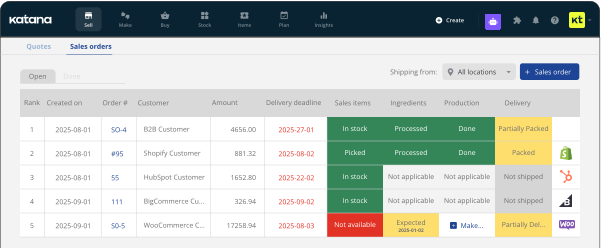
The core inventory workflows are all there: purchase orders, stock transfers, stocktakes, and replenishment planning, but with more depth than in Stocky. If you manufacture or assemble products, you get bill of materials management, production order tracking, and separate tracking for raw materials and finished goods. Your stock stays accurate across all sales channels – besides Shopify, you can sync Amazon, wholesale, and other channels in real time. QuickBooks and Xero connect natively, so your inventory updates your accounts automatically.
The Shopify integration works both ways and updates in real time. Orders go into Katana as soon as they’re placed, and stock updates instantly on both platforms. It also supports multiple Shopify stores and Shopify POS.
Most Katana setups take four to six weeks, giving you plenty of time for a smooth transition before Shopify’s deadline.
If you migrate from Stocky before August 31, Katana will handle your full data migration for free. Our team takes care of SKU mapping, data import, and Shopify sync checks before you go live. Every plan includes 30 days of post-migration support.
Learn more about migrating from Stocky.
FAQ: Migrating from Stocky
Shopify provides read-only access to Stocky for a limited period after the shutdown so you can retrieve records. Any third-party tool connected to Stocky via its API also breaks on that date, so don’t wait on exports.
Not if you want a clean transition. The migration process takes four to six weeks, considering data preparation, import, validation, and making sure your team is comfortable in the new system before cutover. Starting in the last week leaves no room to catch and fix errors before Stocky goes dark.
Document them manually before the shutdown: each vendor, their contact, lead time, and order minimums. That’s the source your migration specialist works from to rebuild supplier records in the new system.
No. Katana works on all Shopify plans. The free migration offer applies to any merchant currently using Stocky, regardless of which plan they’re on.
Get inventory trends, news, and tips every month
Explore all categories
Get visibility over your sales and stock
Wave goodbye to uncertainty with Katana Cloud Inventory — AI-powered for total inventory control