Demand planning for multi-channel brands: how to forecast inventory across Shopify, Amazon, and wholesale
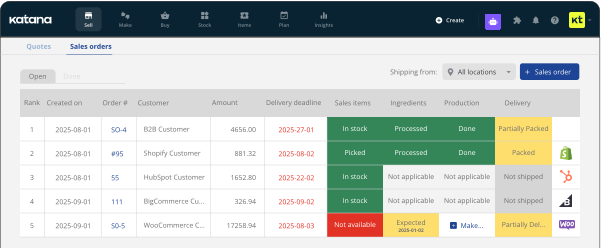
Most multi-channel brands are forecasting from blended data that doesn’t describe any of their channels accurately. This guide breaks down why, and how to set up demand planning by channel, and calculate reorder points correctly for Shopify, Amazon, and wholesale separately.


On a single channel, demand planning is straightforward. You have one demand signal and one inventory pool. Reorder decisions are based on how fast that channel moves stock.
When you get to multiple sales channels, things change. Shopify demand follows your own marketing calendar, Amazon follows search rankings and Buy Box position, and wholesale arrives in large batches on a quarterly cycle. These run independently but draw from the same stock. A forecast built on their combined totals doesn’t distinguish between them, and the reorder decisions it produces will be off for each channel.
This guide covers how demand planning works across channels, where the standard approach falls short, and how to set it up correctly.
Why demand planning breaks down when you sell on multiple channels
A big number of Katana’s customers operate across multiple sales channels and locations. Demand planning is one of the most consistently flagged operational challenges in this group, specifically the gap between what blended inventory data shows and what each channel actually needs.
The core problem is that blended forecasting treats every channel as the same demand source. A promotional spike on Shopify and a seasonal uptick on Amazon look identical in combined data, but they have different causes and different inventory implications. The reorder decisions that come out of a blended forecast don’t reflect either channel accurately.
FBA adds a structural complication. Stock in Amazon’s warehouse is allocated to that channel and can’t be redirected for DTC orders. When a reorder trigger is set against total stock on hand, it’s measuring the wrong number: the combined figure masks what’s available per channel.
On Amazon specifically, a forecast miss has consequences beyond the lost sale. A stockout affects search ranking and Buy Box eligibility, and recovery takes longer than the outage itself. Carrying excess FBA stock incurs long-term storage fees. The tolerance for error is lower than on other channels.
The tools most multi-channel brands start with don’t account for any of this. Spreadsheets (like Excel or Google Sheets) track what you have but can’t forecast across channels with different velocity rates and lead times. Over half of the businesses that come to Katana are still running inventory from spreadsheets when they first get in touch.
Single-channel tools treat additional channels as integrations, so the forecasting logic still sees one demand source.
How to set up multi-channel demand planning
1. Get all your channels into one system
Demand planning works from one accurate picture of stock across all channels. Every sale, every purchase order, and every FBA allocation needs to land in the same inventory record. When stock moves on one channel, the available count everywhere else needs to update.
Katana’s omnichannel sync connects your sales channels to a single inventory record and keeps it current in real time.
One Katana customer whose Shopify store had grown 900% described their workflow before consolidating systems:
“We still have to manually enter every Amazon order one at a time — terrible for accounting.”
This pattern where growth on one channel outpaces the tools managing all of them shows up consistently.
2. Track velocity and set reorder points by channel
Each channel moves stock at its own rate, and a reorder point built on blended velocity doesn’t account for that. Tracking velocity by channel means each reorder calculation is based on that channel’s actual demand rate.
A reorder point is the stock level that triggers a new purchase order, set high enough that incoming stock arrives before you run out. The calculation: (average daily sales × lead time in days) + safety stock. Safety stock covers unexpected demand or supplier delays; a few days of sales above your average is usually enough.
Run this separately for FBA-allocated stock and warehouse stock, since the demand rate and fulfillment path differ.
Katana’s Planning and Forecasting features analyze your sales data and generate replenishment recommendations, including suggested reorder dates and quantities, with SKU-level lead times factored in.
3. Build planned context into your forecast
Sales history captures what’s already happened. A promotion next month or an expected wholesale order won’t appear in that data until after it occurs. Most teams track this context separately from their inventory system, which means it doesn’t inform purchase decisions when it should.
The practical step is keeping a record of planned events and factoring them into your reorder decisions in Katana manually before they show up in your sales data.
4. Set allocation rules before stock gets tight
When stock can’t cover all channels, filling orders as they arrive often means the highest-margin channel gets shorted. Explicit allocation rules prevent this: which channel gets priority when stock is constrained, and at what level to pause wholesale commitments to protect DTC availability.
These decisions produce better outcomes when made in advance rather than under pressure..
How AI improves demand planning for multi-channel brands
AI’s function in demand planning is pattern recognition across sales history. It identifies seasonal shifts and velocity changes by channel and updates forecasts continuously as new data comes in, without a manual monthly review.
Katana’s Planning and Forecasting uses real-time sales data alongside historical trends to generate replenishment recommendations and flag items approaching their suggested reorder date. As new sales data comes in, the forecast updates to reflect current demand.
AI works from the data it has. A wholesale order not yet logged or a supplier issue you haven’t entered won’t appear in the forecast. Those inputs still need to come from you.
For brands that also manufacture their own products, Katana connects inventory and demand planning to production scheduling, so purchasing and production decisions work from the same data.
Demand planning software for multi-channel brands
Katana connects to Shopify and Amazon and gives your stock and order management a single home. Once your channels are synced, Katana’s Planning and Forecasting flags items approaching their reorder threshold and generates purchase recommendations based on your lead times and sales history.
For most teams moving from spreadsheets, setup takes a few hours.
See how omnichannel sync works →
FAQ: Selling on Amazon and Shopify
Demand planning is the process of estimating how much of each product you’ll need and when, so you can order the right amount before stock runs low. For ecommerce brands, that means working from sales history and lead times with seasonal patterns and planned events factored in. The output is a set of reorder points and purchase schedules that keep stock available without over-ordering.
AI improves forecasting by analyzing sales history continuously and updating forecasts as new data comes in. For multi-channel brands, each channel’s demand gets tracked independently and reorder suggestions update automatically as velocity changes.
Demand planning is the forecasting process: estimating what you’ll need and when. Replenishment is placing the order once you have that information. Good demand planning means replenishment decisions are based on a forward-looking forecast, placed with enough lead time to arrive before stock runs out.
For multi-channel brands managing more than a handful of SKUs, the cost of stockouts and emergency orders generally justifies setting up proper demand planning. using an inventory management platform like Katana. A dedicated operations team isn’t a prerequisite.
Get inventory trends, news, and tips every month
Explore all categories
Get visibility over your sales and stock
Wave goodbye to uncertainty with Katana Cloud Inventory — AI-powered for total inventory control