How to manage inventory across Amazon and Shopify without stockouts
Amazon relies on FBA stock while Shopify usually pulls from warehouse inventory. Once both channels sell the same products, teams need to plan inventory across locations and inbound supply. This article outlines the planning routines that keep Amazon and Shopify stocked without overselling.


Growth usually comes with growing pains, and businesses are no exception. As brands expand, adding new sales channels becomes a natural step. Shopify and Amazon are two of the most common places to start. The problem is that both platforms track inventory separately, which creates a fragmented picture of what’s really in stock and where.
Getting a clear, shared view of stock across both channels is something most teams end up building themselves, often after the first painful stockout or oversell. There’s a better way to do it: treating inventory planning as one workflow that matches stock levels and purchase orders with channel availability.
These are the operational patterns and tools that will help your product businesses manage Amazon and Shopify inventory together – accurately and without the constant manual overhead.
Why inventory planning gets harder when you sell on Amazon and Shopify
Amazon and Shopify may sell the same items, but they don’t operate from the same inventory logic. Each channel tracks availability through its own system, and neither reflects the full picture once purchasing and inbound shipments are taken into account.
Stock allocated to Amazon needs to support FBA availability while the same items may still be expected to cover Shopify orders. Without a shared view of current stock and open purchase orders, planning decisions rely on information pulled from multiple systems.
Over time, planning needs to consider more than stock counts. Teams need to know where inventory sits and how it moves between locations. Warehouse stock, FBA inventory, and inbound shipments all support future orders, yet they appear in different systems at different stages of availability.
Treating these inventory states separately is the first step toward planning Amazon and Shopify inventory in a way that keeps both channels stocked.
Plan inventory across three pools: FBA stock, warehouse stock, and inbound inventory
Once planning takes stock location into account, three pools start shaping inventory decisions. Stock inside FBA behaves differently from stock in your warehouse, and both differ from inventory already on the way from suppliers. Treating everything as a single number hides important differences in how quickly stock can support demand.
- FBA stock
Inventory inside Amazon’s fulfillment network exists primarily to keep marketplace listings active. Replenishment needs enough lead time for inventory to reach Amazon and become available for sale.
- Warehouse stock
Inventory held in your own warehouse or with a 3PL usually carries the most flexibility. It fulfills direct orders and can replenish FBA when Amazon stock runs low.
- Inbound inventory
Purchase orders and shipments that have not yet arrived still shape what inventory will be available in the near future. Open supplier orders often influence whether stock should be allocated to a channel or whether another purchase order needs to be placed.
Looking at inventory through these pools keeps planning grounded in where stock sits today and what supply will look like in the coming weeks.
Use channel buffers to prevent Amazon stockouts and Shopify overselling
Amazon availability depends on consistent stock inside FBA. Listings that run out of inventory can lose ranking and visibility, and recovery often takes time even after stock returns. Shopify orders usually draw from warehouse stock and tend to fluctuate more directly with promotions or seasonal spikes.
Without guardrails, one channel can consume inventory the other depends on.
Many teams address this by setting channel buffers. A portion of warehouse stock stays reserved for Amazon replenishment while the rest remains available for direct orders. Those numbers shift as demand changes and new purchase orders are placed, so buffers need regular adjustment.
Maintaining them gets difficult when inventory information lives in different tools, though. So many teams end up rebuilding the same view of stock every time they need to decide where inventory should go next.
Inventory management systems remove that step. With stock levels and purchasing activity in the same place, teams can adjust channel availability without constantly reconciling numbers across tools.
Know when to reorder, transfer inventory to FBA, or hold stock for another channel
Inventory decisions should be based on coverage – how many days or weeks current supply can support demand. Coverage helps teams see early when supply will fall short and when inventory needs to move.
Reorder when coverage no longer reaches the next supplier delivery
Start with the demand expected during the supplier lead time and compare it against the supply that will exist during that window. Warehouse stock is part of that coverage, and confirmed inbound orders count if they arrive before the lead time closes.
When that coverage falls short, place the purchase order early enough for the shipment to arrive before shortages appear in either channel. Waiting until stock looks low usually means the new inventory arrives too late to prevent gaps in availability.
Transfer inventory to FBA when supply exists but sits in the wrong place
Low Amazon stock doesn’t always mean overall inventory is running out. Warehouse shelves may still hold enough supply while FBA units run down.
Relocate warehouse stock to FBA to restore marketplace availability without purchasing more inventory.
Hold stock when warehouse coverage is thin
Sending more inventory to FBA can drain the stock supporting direct orders. When warehouse coverage is tight or inbound shipments are weeks away, keep part of the warehouse inventory for Shopify orders.
This protects direct sales and reduces the risk of overselling while waiting for the next supplier shipment.
Keep purchase orders, inbound shipments, and channel inventory in one system
Inventory planning across Amazon and Shopify depends on a clear view of current stock and incoming supply. Warehouse inventory only shows part of that picture. Open purchase orders and inbound shipments determine how much supply will arrive in the coming weeks and how inventory should be allocated between channels.
That inventory information often sits across several tools. Teams check warehouse stock, confirm supplier orders, and review inbound shipments before deciding how inventory should be distributed between Amazon and Shopify.
Keeping purchase orders and stock data together gives teams the full picture without rebuilding it every time. Expected inventory updates as orders are placed and shipments move through receiving, which keeps channel allocation decisions aligned with the same numbers.
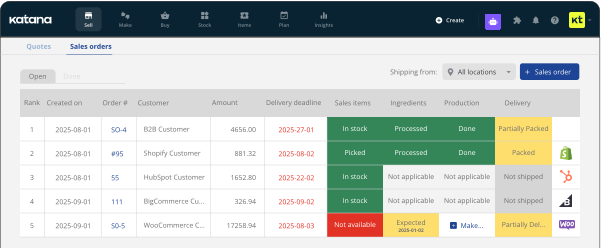
Inventory systems like Katana bring purchasing and stock data into the same place, which makes it easier to plan availability across both Amazon and Shopify.
Looking for a better way to manage inventory for multiple sales channels? See how Katana keeps orders and stock in sync across both channels, without the manual reconciliation.”
Get inventory trends, news, and tips every month
Explore all categories
Get visibility over your sales and stock
Wave goodbye to uncertainty with Katana Cloud Inventory — AI-powered for total inventory control