Product data is the new SEO: Inventory signals that keep products visible in chat and search
Shopping is starting to happen inside chat and AI search panels, and the “ready to buy” checks are stricter than a normal product page visit. This post covers the basics of what these tools look for – variants, availability, fulfillment location, delivery dates, and consistent IDs – and gives product SMBs a simple starting point for getting ready with their current stack.


More product discovery and comparison is happening inside AI chat and search panels. Agent-led buying or Agentic Commerce means AI systems that don’t just recommend products anymore, but also decide when and how to buy them. In some cases, the buyer can find an option and complete the purchase without spending any time on your site.
That puts a different kind of pressure on product businesses. You can have strong product pages and good demand, then still lose the sale because the AI shopping tool can’t confirm something basic – like whether the right variant is available or the expected delivery date.
When those basics are unclear, the tool has to protect the shopper experience. It tends to pick products that look easier to fulfill, because that leads to fewer cancellations and less back-and-forth.
Product data is starting to work like SEO in AI shopping flows. A clean catalog helps you get considered, and dependable inventory signals help you keep earning recommendations over time.
How do AI shopping flows determine if a product is ready to buy?
AI shopping surfaces are trying to complete the buyer’s task with minimal friction, and their biggest risk is recommending something that turns into a dead end. If a shopper picks a variant and hits “out of stock,” or the delivery date changes after purchase, that failure is attached to the AI assistant experience as much as it is to the store.
That’s why these systems tend to favor listings that look consistent across the steps around recommendation and fulfillment.
To feel confident recommending a product, the assistant needs a clean path through selection and fulfillment:
- The buyer can select the right variant without ambiguity.
- Stock status holds up when it’s checked.
- The delivery promise matches how you ship.
- The product matches across the tools involved in checkout and fulfillment.
Some surfaces check stock before they recommend. Others recommend first, then confirm at checkout. Either way, repeated failures can build a pattern that works against the listing, especially when checkout happens inside the same surface where the recommendation was made.
→ Catalog content helps you get considered. Inventory reliability helps you stay eligible when the tool tries to finish the purchase.
Which inventory signals decide visibility in AI selling and buying?
1. Variant accuracy
AI shopping flows pick a specific purchasable option. That option is usually a variant, like size or color.
When variant data is missing or inconsistent across channels, the surface has to make assumptions. That leads to wrong picks and extra customer support work. It can also lead to returns, which makes the listing look risky the next time.
A few common break points:
- The title says “2-pack,” but the options don’t reflect it.
- One channel labels the color “Midnight” while another calls it “Black.”
- The store page is correct, but the feed or catalog copy is missing variant options.
Variant info needs to stay consistent across the places you sell. It also needs to map cleanly to the SKU that ships.
2. Live availability (by variant)
“In stock” has become part of the decision in AI-assisted shopping.
These tools care about whether the exact variant is available right now – in real time.
If “Size M / Black” is gone but the listing looks available because other variants remain, the buyer gets pushed into a substitution step late in the flow. That’s where purchases often fall apart.
Over time, lagging stock updates or cancellations/substitutions teach the surface that your listing is risky. This gets harder when you sell in more than one place.
3. Location-based fulfillment
A single stock number rarely holds up once inventory sits in multiple places, like warehouses or 3PLs.
What matters is whether stock sits close enough to ship. A product might show 50 units available while the nearest fulfillment site has zero – so the delivery date you quote won’t hold up.
Tracking stock per location lets AI shopping tools see what can ship today and from where.
4. Realistic ETAs
Delivery promises sit next to price and reviews during selection. “Best case” ETAs can do damage when they don’t hold up.
A practical example from inventory planning: a supplier claims a 21-day lead time, but your purchase history shows it usually lands closer to 28 days. If your system keeps planning and promising the shorter number, you’ll miss delivery windows. Late orders become the pattern the surface remembers.
Realistic ETAs need to match how your operation works most of the time. Seasonality and supplier delays affect that, and so does stock location.
5. Consistent IDs across channels
This is the unglamorous one that makes everything else possible: the same product needs the same ID everywhere.
When SKUs or IDs drift across your store, marketplaces, and fulfillment tools, stock updates land on the wrong item. Variants don’t match, so order routing needs manual cleanup.
AI shopping surfaces want clean matching so the product they recommend connects to the stock record and the ship-from location without extra steps.
How to support AI shopping with your current stack
To make your AI shopping work, your current software needs clear roles. Most product businesses already use a mix of online stores, shipping partners, and accounting apps, with an inventory management system tying them together. Problems happen when these tools keep conflicting info on stock levels and delivery dates.
AI shopping tools shine a light on these inconsistencies. A chat or search assistant needs one reliable answer when checking if something is in stock. Giving different info across systems confuses the AI and your customers.
To fix this, choose one system as your main source for inventory info. Use this central hub to say what’s for sale, track where it is, and hold stock as orders come in. Your other tools should then sync up with this main record.
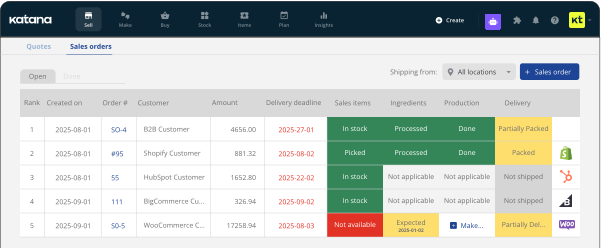
Katana acts as this central point for inventory and making products. By connecting Katana’s inventory management software to your online store, shipping partners, and accounting apps, you make sure every part of your business – and any AI tool reading from it – sees the same stock numbers. This setup gets rid of the manual work of matching up data and helps your team manage stock across different locations without extra steps.
Why inventory dictates success in Agentic Commerce
Agentic commerce turns inventory reliability into a performance record. Each time an AI agent recommends your product, it gets a fast signal back: did the order complete as expected, or did something break at variant selection, availability check, or delivery confirmation?
That feedback affects future recommendations. Products that complete cleanly rise in priority. Products that create extra steps get deprioritized, even if the product itself is great.
This should be a priority if you run a multi-channel business, hold stock in more than one location, or ship high volumes on tight margins. In AI buying and selling, inventory mistakes show up as failed purchases and don’t get smoothed over by browsing and manual comparison.
Learn more about discoverability and scaling for product SMBs in our blog.
Get inventory trends, news, and tips every month
Explore all categories
Get visibility over your sales and stock
Wave goodbye to uncertainty with Katana Cloud Inventory — AI-powered for total inventory control