Multi-location, multi-channel inventory with Shopify: what’s covered and what isn’t
Shopify handles location tracking and fulfillment routing well. But as the business grows, more stock moves for reasons Shopify doesn’t directly see. This article covers what Shopify’s multi-location model tracks, where multi-channel operations create inventory blind spots, and what ops routine keeps availability accurate across channels.


Multi-location inventory is usually a sign things are going well. As the business grows, stock needs to be in more places to keep up with demand. Shopify supports that well with built-in location tracking and fulfillment rules, so teams can sell across locations without manually keeping tabs on what’s in each warehouse or store.
As the business grows, though, inventory stops being adjusted only by Shopify sales and starts being adjusted by operational work that may sit outside the storefront. At that point, the risk that the business ends up with multiple inventory truths grows exponentially, unless one system acts as the operational record.
What Shopify tracks in a multi-location setup
Shopify’s multi-location model is built around locations and location-level inventory. In practice, that means it can:
- Create and manage multiple locations (warehouse, retail, pop-up, and so on)
- Track inventory per location so each site has its own count
- Route fulfillment by location priority
- Show inventory status in the admin so teams can see what’s available and what’s tied up
- Move stock using transfers, including partial receipts
Those features keep the selling experience consistent: a product page reflects Shopify’s view of location inventory, and fulfillment routes based on how you want to ship.
Where multi-channel operations add pressure
Our data shows over half of SMBs are already running two or more sales channels, with Shopify the most common. That’s a lot of businesses where stock is moving for reasons Shopify doesn’t directly see – a wholesale order going out, a marketplace sale on Amazon, a 3PL reporting a count, a production run consuming materials – and each of those moves needs to land somewhere in the inventory record.
The business doesn’t need to be very large for this to become a problem. Wholesale and marketplace activity alone can create enough stock movement outside Shopify to put availability numbers out of sync. When that happens consistently, teams often can’t tell whether the number in Shopify reflects what’s actually available to sell, or just what Shopify last knew about.
The difference between system availability and operational availability
Shopify availability is designed to support selling. It’s the number Shopify uses to decide whether an order can be taken and which location should fulfill it, based on what Shopify currently knows.
Operational availability is the number your team can stand behind when it’s time to pick, pack, or ship. It has to reflect the same location-level reality Shopify uses – but it also has to stay current with stock changes from the wider operation: reservations for production, wholesale commitments, late or partial receiving, corrections from counts, and timing gaps when stock is sitting with partners.
When those two views drift, overselling leads to cancellations and delays, while understating availability creates stockouts that send customers elsewhere. Shoppers don’t give much ground here: 91% won’t wait for an item to restock, 43% will switch to a different brand if what they want isn’t available, and 72% expect inventory information to be accurate across all channels. Think about that last one: most customers already assume your stock data is live and correct. When it isn’t, the trust damage lands before you even know there was a problem.
The ops routine that keeps multi-location inventory reliable
Multi-location inventory stays accurate when the routine is consistent. The process doesn’t have to be complicated, but it does have to cover the moments where accuracy usually breaks – and for multi-channel businesses, those moments multiply as more of the operation sits outside Shopify.
Transfers need to be recorded end to end. The workflow exists in Shopify, but the day-to-day discipline matters just as much: teams need to record the movement at both ends and flag exceptions when a shipment doesn’t arrive as expected.
Audits and adjustments keep the system in sync with the shelf. Counts fall out of step for normal reasons – damage, shrinkage, mis-picks, returns, timing – and the longer corrections wait, the more likely Shopify availability stops matching what can actually ship.
Purchasing and receiving is another place where accuracy slips without anyone noticing. Incoming inventory only helps if it tracks what’s on the way, what’s arrived, and what’s been received into the right location – especially when deliveries are split or partial.
Manufacturing and assembly add one more layer. Once production starts, materials move through the operation before they become sellable goods. If that flow isn’t reflected in the same inventory record that feeds Shopify, availability can look fine while the operation is running tight.
Each of these is manageable on its own. The challenge is covering all of them in one place, especially when stock is also moving across channels like Amazon, wholesale, or retail. This is what many multi-channel, multi-location teams end up patching with spreadsheets when their systems don’t share one inventory picture.
Supporting Shopify with a central inventory record
A practical way to keep Shopify’s availability dependable is to pair it with an operational inventory record that covers everything the storefront doesn’t see – purchasing, production, transfers, adjustments, and sales across all channels – and keeping it in sync with Shopify.
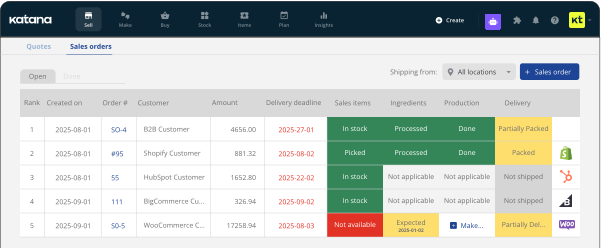
Katana acts as that system of record for inventory, orders, and production. It can validate inventory values between systems and gives teams one place to record stock changes from across the operation: sales on Amazon, retail, or wholesale, alongside receiving, production updates, and internal moves. Shopify stays accurate because the operational record behind it is accurate – across every channel, not just the ones Shopify touches directly.
Katana is built to work alongside tools like Shopify rather than replace them. With Shopify running commerce and Katana maintaining the operational inventory record, availability stays aligned across locations and channels without relying on manual workarounds. See how the Shopify integration works.
FAQ: Multi-channel inventory for Shopify businesses
Shopify updates inventory based on what happens in Shopify: sales, transfers between locations, and manual adjustments made in the admin. It doesn’t automatically pick up stock changes that happen outside the storefront: wholesale orders fulfilled from the same warehouse, sales on Amazon or other marketplaces, stock consumed in production, 3PL counts, or corrections that originate in a separate system. Those moves still need to find their way into the inventory record, and if they don’t, Shopify’s availability numbers start to lag behind what’s on hand.
Record every stock movement in one system and keep Shopify in sync with it. That means purchasing, receiving, production, wholesale, and marketplace activity all need to land in the same inventory record, instead of managed separately per channel.
Shopify inventory is the number Shopify uses to accept orders and route fulfillment. Operational inventory accounts for everything else: production reservations, wholesale commitments, stock in transit, and sales across channels Shopify doesn’t see. For Shopify-only businesses, the two are usually close. For multi-channel businesses or businesses with production, they can diverge quickly.
Katana holds the operational inventory record and keeps Shopify updated from there. Stock changes from production, purchasing, wholesale, or other sales channels are recorded in Katana, which syncs availability back to Shopify.
Get inventory trends, news, and tips every month
Explore all categories
Get visibility over your sales and stock
Wave goodbye to uncertainty with Katana Cloud Inventory — AI-powered for total inventory control