If AI agents do the shopping, who wins the shelf?
AI shopping agents are starting to influence how products get discovered and purchased. Inventory management and product data now affect visibility as much as pricing and promotion for multi-channel product businesses. This article explains how AI-driven commerce changes the “digital shelf” and what operational steps businesses can take to stay visible.


If customers don’t see it, they won’t buy it. Product brands have always worked to earn visibility where buying decisions happen. For decades, that meant securing the right aisle, the right height, the right placement, and packaging that stands out. But what does “visibility” look like when an AI shopping agent helps choose – or places the order directly?
Salesforce reports that 39% of consumers, and over half of Gen Z, already use AI for product discovery. And we’re starting to see shopping assistants that can go beyond answering questions and support checkout and purchasing. Albertsons has introduced an AI assistant for meal planning and restocking essentials. Walmart is investing in AI agents across shoppers, employees, and suppliers. Amazon’s Rufus can interpret handwritten lists, add items to cart, track pricing, and support auto-buy behavior.
This does not mean shoppers will fully outsource buying decisions tomorrow. Bain estimates that 24% of U.S. consumers would currently feel comfortable letting an AI agent complete a purchase. The first wave is likely to focus on repeatable replenishment. For staple products, shoppers often want consistency more than discovery, and AI-assisted buying is already appearing in everyday consumer goods.
What does “product visibility” mean when an AI agent does the choosing?
If a person is browsing, visibility depends on placement, branding, and persuasion. When software evaluates options, the “shelf” becomes structured data. The product must match the shopper’s rules, price expectations, and delivery requirements. Ads still exist, but an AI assistant prioritizes what it can confidently verify.
For product businesses, machine-level visibility often depends on whether an agent can answer a few operational questions with certainty:
Does the product match the buyer’s rules?
Attributes such as ingredients, materials, compatibility, certifications, or allergens need to be complete and consistent. GS1 US continues to emphasize scannable codes and structured product data that surface key details such as ingredients, safety information, and recall alerts.
Can it be fulfilled reliably?
Agents tend to favor items that can ship on time and without substitutions. If availability fluctuates or substitutions occur frequently, the product may stop appearing as a preferred option.
Does pricing align with buyer preferences?
AI assistants can apply thresholds or price conditions automatically. Auto-buy features tied to price drops are becoming more common.
Is the product low risk to recommend?
Incomplete or inconsistent product information increases hesitation. In regulated categories, recall activity reinforces that caution. NACS reported a sharp year-over-year increase in FDA recalls tied to foreign materials in early 2025.
If an agent cannot confirm these basics quickly, the product may not surface prominently, even if it performs well in traditional merchandising.
The operational basics that keep products visible
AI shopping tools place weight on consistent product data and accurate inventory.
To stay visible in AI-driven commerce:
Standardize product information at the source.
Keep specifications, ingredients or materials, pack sizes, GTINs, and other identifiers consistent across sales channels and retailer feeds.
Track inventory across every fulfillment location.
That includes owned warehouses, 3PLs, and retail programs. Separate committed stock from available stock so systems reflect what can actually ship.
Define substitution rules before spikes happen.
Some products are interchangeable. Others are not. Clarifying that in advance reduces friction.
Keep traceability and safety records organized.
Partners and regulators may request details quickly. Being able to respond without delay supports trust across the supply chain.
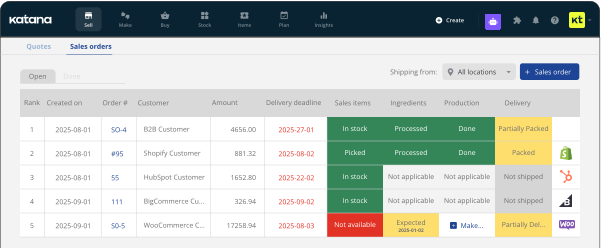
This is where inventory management systems such as Katana support growing multi-channel product businesses. Katana connects purchasing, production, sales orders, and stock movements in one inventory record, helping teams track what is in stock, what is committed, and what is available to sell. Confirmed sales orders can flow into fulfillment or production workflows, which helps maintain accurate counts across locations.
Across Katana’s 2025 data from more than 1,500 product businesses, inventory value shifted by over 60% month over month, even outside peak seasons. When stock moves that quickly, small delays between systems can affect availability and reorder timing.
Preparing your inventory management for AI-driven commerce
AI-assisted buying will likely expand through routine and repeat purchases before influencing higher-consideration categories. As that happens, product selection will increasingly depend on structured product data and reliable inventory availability.
Inventory management becomes part of how products surface in AI-assisted shopping. If stock levels are inaccurate or product data is incomplete, agents may exclude items before a shopper ever sees them.
Preparing for AI-driven commerce means focusing on operational clarity:
- Keep inventory records current across locations.
- Separate committed stock from available stock.
- Confirm purchase receipts and production updates without delay.
- Maintain consistent product data across sales channels.
These steps already support multi-channel growth. They also reduce friction when AI systems evaluate availability, fulfillment reliability, and product details before presenting options.
As automated purchasing expands, inventory accuracy and data consistency influence visibility alongside pricing and promotion. Operational discipline becomes part of staying competitive in AI-assisted commerce.
Get inventory trends, news, and tips every month
Explore all categories
Get visibility over your sales and stock
Wave goodbye to uncertainty with Katana Cloud Inventory — AI-powered for total inventory control