
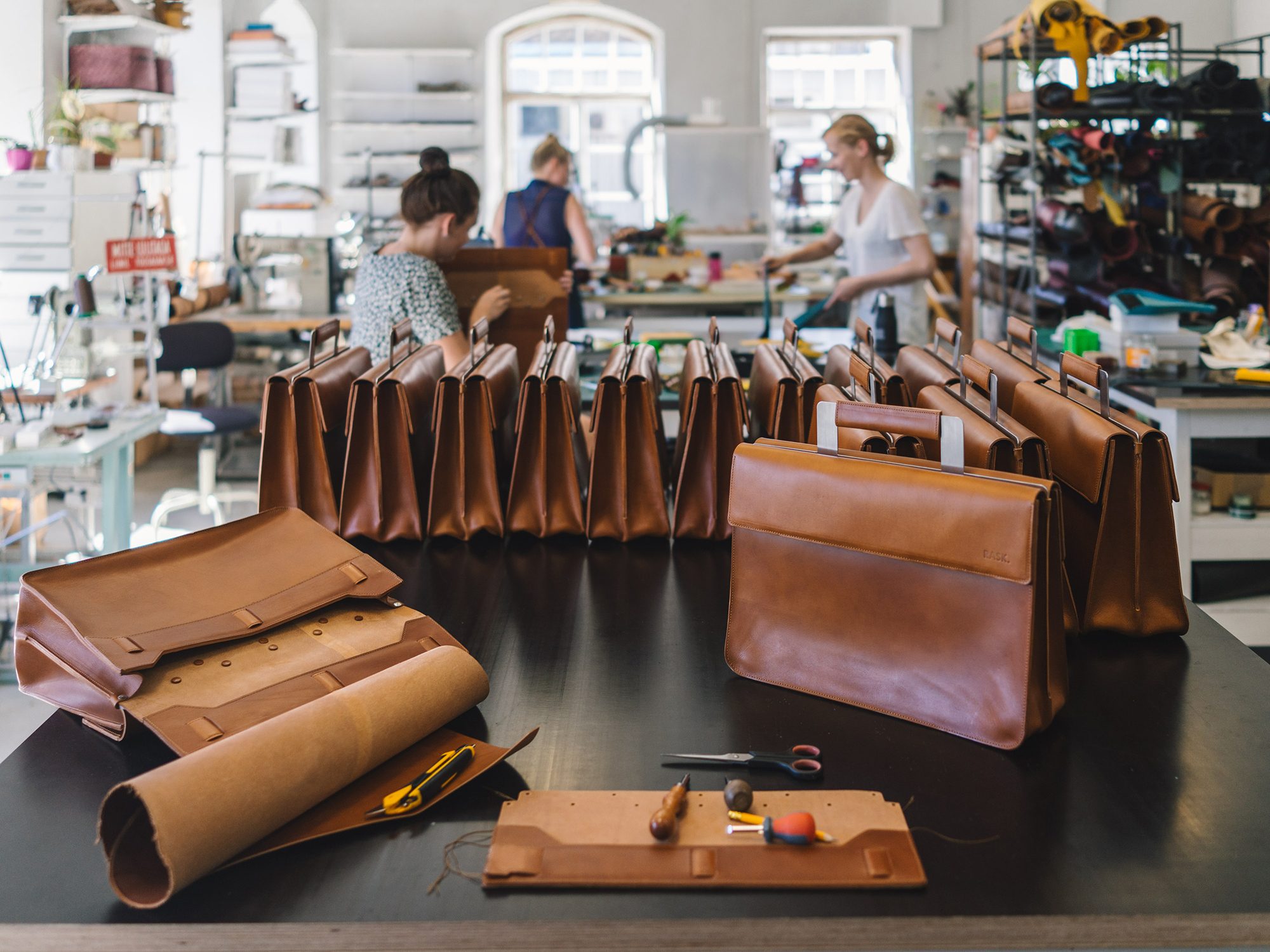
Stella Soomlais: from handwritten order sheets to a studio that runs on Katana
We’re Stella Soomlais, a leather design studio and small producer in Tallinn. We were Katana’s first customer, signing up in 2017 while Katana was still in beta. Today our web and invoice orders reach Katana without retyping, and Katana sits at the core of our own software.
Written by Tõnu Runnel, systems and integrations at Stella Soomlais
70% fewer
manual steps per order, from payment to parcel
100+ hours
saved on order admin every year, all from one person’s desk

Website
Integrations
Katana API, Voog, Erply POS, RIK e-arveldaja, Omniva, SmartPost
Industry
Leather goods and workshops
Location
Tallinn, Estonia
About Stella Soomlais
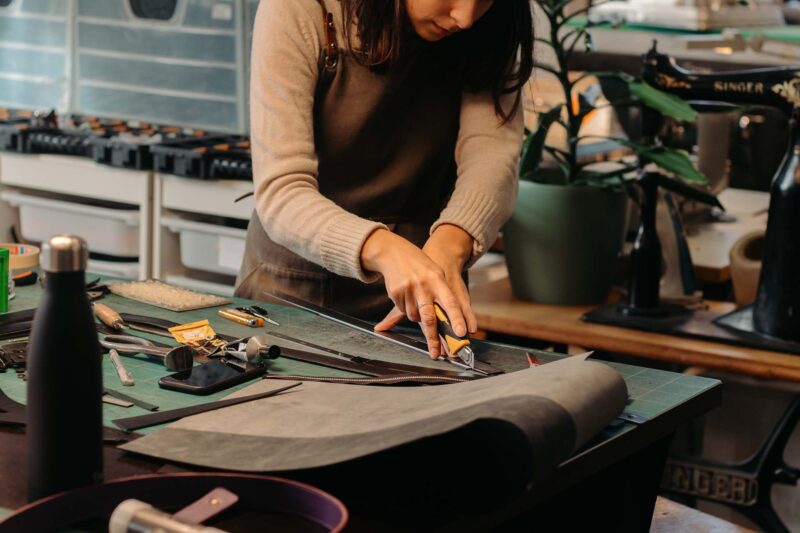
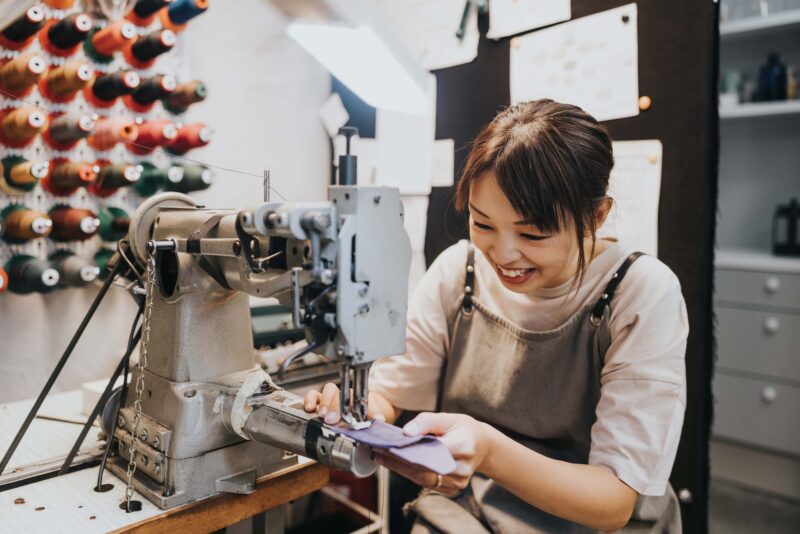
Stella Runnel founded our studio and has been designing bags since 2004. Every bag we make is designed and crafted in Tallinn by Estonian crafters, carries its own serial number and is made to last a lifetime. We offer aftercare and repairs, rent out bags, buy them back for resale, and turn the most worn into new Round 2 pieces.
The other half of our business is workshops: more than 120 groups since 2023, in our studio and at companies’ offices – including a couple for Katana!
The challenge
Our work is varied. Most of our bags are made to order, many with embossed initials, across more than 2,300 variants. Orders come from our web shop, the studio shop, phone and email, resellers, corporate clients and aftercare customers.
For years, every order started as a printed order sheet, filled in by hand. That worked at the bench, but each bag added another sheet to a paper archive that only kept growing. Any business analysis meant digging through paper.
Every bag we make has someone waiting for it. On paper, we could never see all of them at once.
Stella Runnel, Designer and Founder
Moving production into Katana ended the paper at the bench, but orders still reached Katana by hand. Until this year, one typical made-to-order web order took 13 hand steps across four systems: email, our web shop, Katana and the carrier’s portal.
13
Hand steps per web order, across 4 systems
~18 min
per order to type in, email the customer and make the label
272
sales orders we typed in by hand in the first half of 2026, all by one person
How Katana helped
We started using Katana in 2017 as its first pilot customer, while Katana was still in early development. Our everyday production and feedback helped shape the product. Since 2021, every bag and accessory we make, along with aftercare and repair work, has gone through Katana.
Over the years we tried other tools and dropped them. Katana stayed. There has never been an idea about switching Katana to anything else.
Today nearly every process in our company runs through our own custom-built application, which integrates around 25 services and platforms with Katana at its core. Katana is our source of truth for production and stock. Around it, the application adds what a small studio needs: an integrated web shop, the shop till, corporate invoicing, parcel delivery and banking, plus our own register of thousands of unique bags and their histories.
What we built on top of Katana
I joined at the start of 2026 to help on the systems side, after almost 30 years building tech and design companies. The first thing I did was map our processes, and it was clear we were patching things together with spreadsheets, phone calls, and Gmail. We used labels in Gmail to mark what had to go into Katana, and one of us typed it in by hand.
There was no point rebuilding what Katana already handles. I wanted to rely on it for production, stock and product data, and just plug it into the other parts of the business through the API.
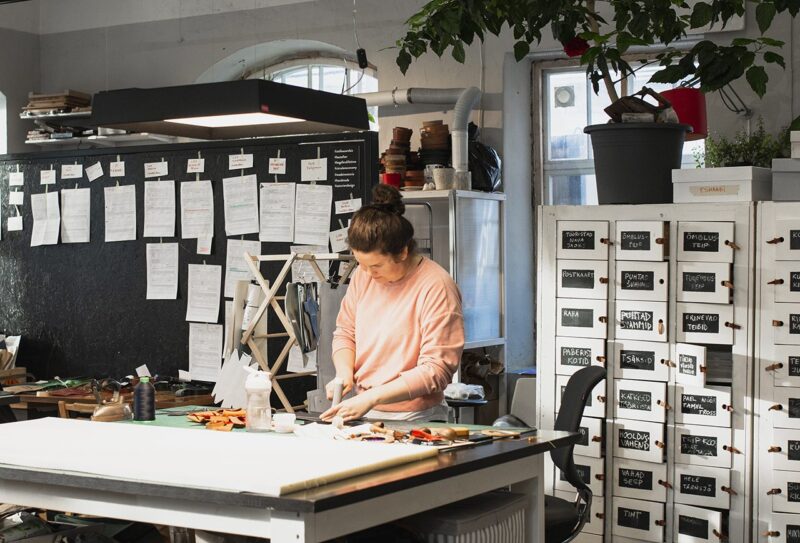
- A view made for crafters. Our crafters used to squeeze everything into the product name: a code for the embossing plate, a two-letter mark for anything custom, the due date. I built a simple mobile view on top of Katana’s production statuses, so they read the job and press a button.
- Stock that sorts itself. Orders from our web shop, the till and invoices all land in Katana. If the bag is on the shelf, it’s reserved. If not, it goes into production. Phone orders can start as a Katana job and be invoiced later, or the other way around.
- “Your bag is ready” emails. When a job is marked done in Katana, a prefilled email appears with the Omniva or SmartPost tracking code. One of us still checks each one before it goes out. Shipping no longer means retyping the address on the carrier’s site.
- A register of every bag. Our register of numbered bags moved from paper to a messy spreadsheet. Cleaning it up was the hardest part. We’re now linking serial numbers back to the Katana manufacturing orders that made them.
What building on Katana was like
I put off the API for a long time. Katana looked big and built for manufacturing, which isn’t my background.
When I finally started, it was completely painless. The API was well documented, so the documentation just snapped into place for my Claude Code. I didn’t need to read a single line of code.
Katana does production and stock very well, and its API lets us connect it to everything that’s specific to us.
6,400+
manufacturing orders since 2019
2,300+
product variants in Katana
~25
services connected around Katana
6,000+
numbered bags in the register

Results
What Katana changed for us
- A paid order once took 13 hand steps across four systems. Now it takes a few clicks in one, freeing more than 100 hours of order admin a year.
- No paper archive: the production figures in this story came straight from our Katana account.
- Our new bags carry their production history into aftercare, rental and resale.
- With production on Katana, our same small team also runs the workshops, the shop and our circular services.
We started with Katana when it was still in beta. Years later, it’s still where every bag we make begins.
Stella Runnel, Designer and Founder
More case studies












Get visibility over your sales and stock
Wave goodbye to uncertainty with Katana Cloud Inventory — AI-powered for total inventory control
