
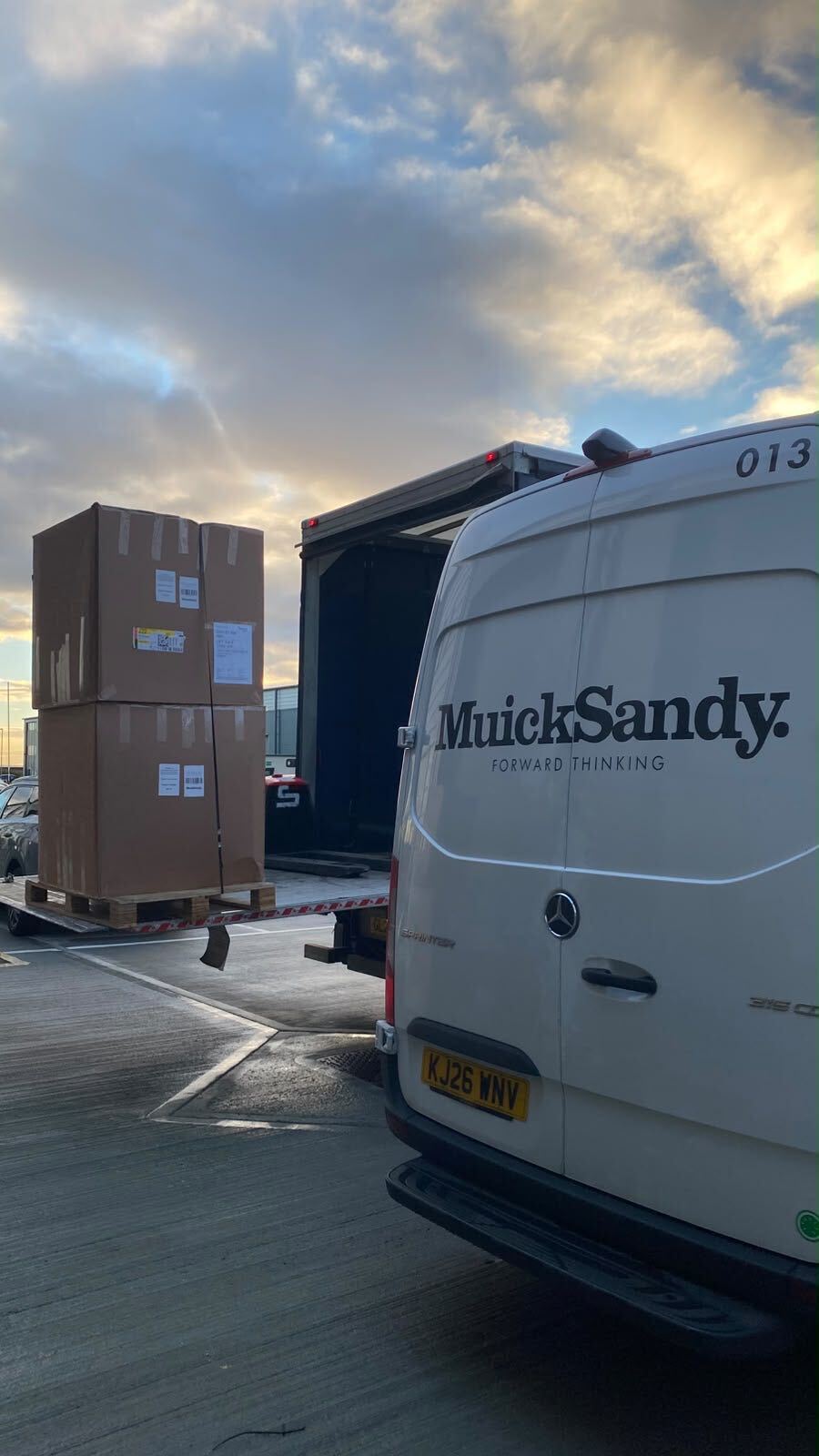
How Muick Sandy personalized Katana with 1,500+ automated actions a day
Muick Sandy moved its stock out of Google Sheets and into one record across 10 locations in Katana. Founder Ben Kenny then built his own automations connecting Katana to HubSpot, Slack and Shiptheory, which now run more than 1,500 actions a day.
1,500+ a day
automated actions between Katana and their other systems
From 5 weeks to 10 days
Lead time on stocked items

Website
Integrations
Industry
Mobility scooters
Location
United Kingdom
About Muick Sandy
Muick Sandy started trading in March 2023 with one idea: mobility products for people who care about design. By their third year, they had reached £19M in revenue.
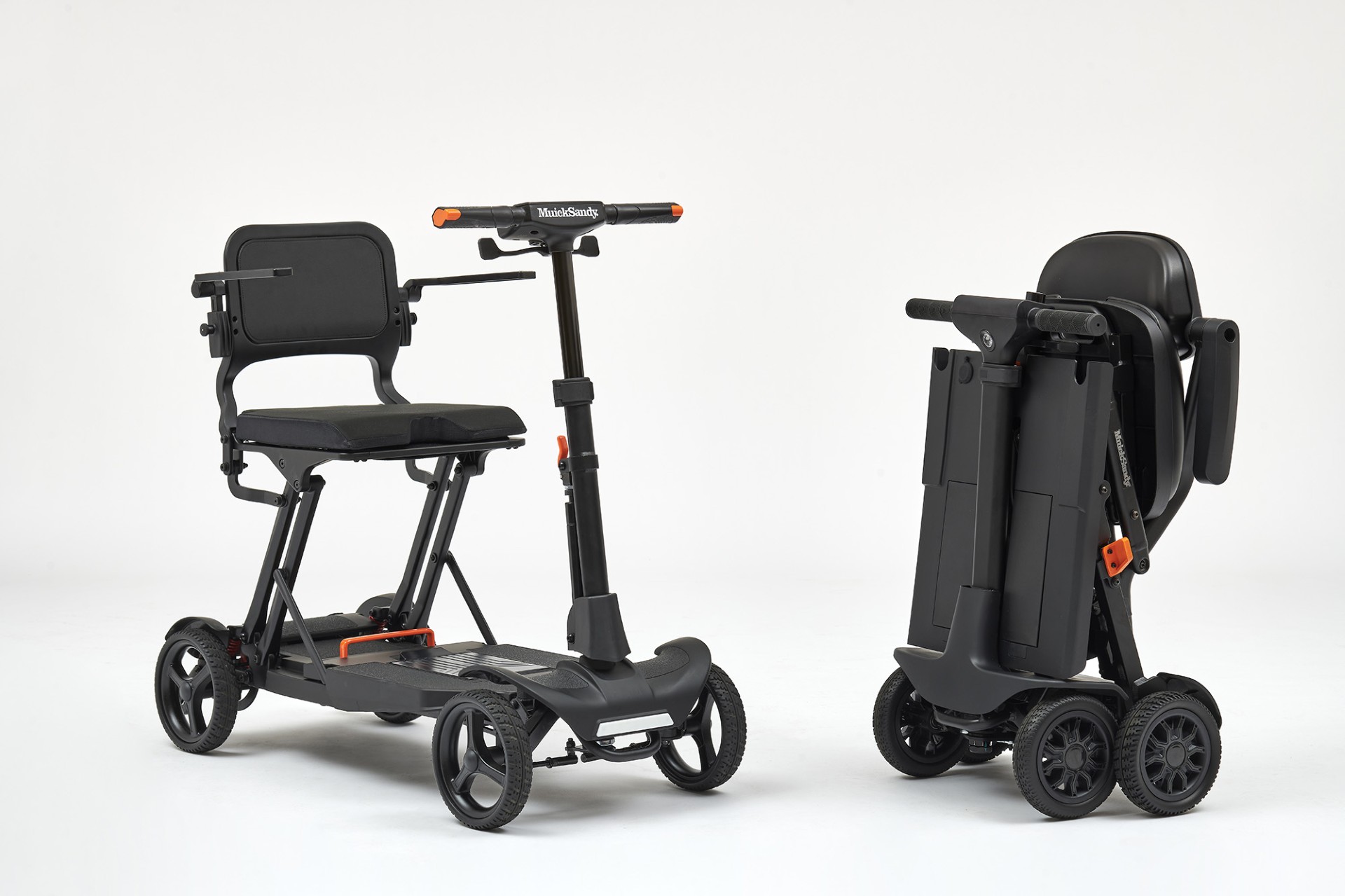
They sell two product lines. The first is their own mobility scooters, made for them by a partner in the Far East and shipped in by the container. The second is rise and recline chairs, built to order by a factory in the UK in more than a million possible combinations of size, fabric and motor.
Customers find them through online ads, magazine inserts and leaflets, then ask for a brochure. A call center follows up, and around 40% of those calls end with a home visit booked, where a sales rep lets the customer try the product in their own house and check it fits in the car. About half of those visits end in a sale. Muick Sandy then delivers every order with its own team, so the experience stays in their hands from the first call to the front door.
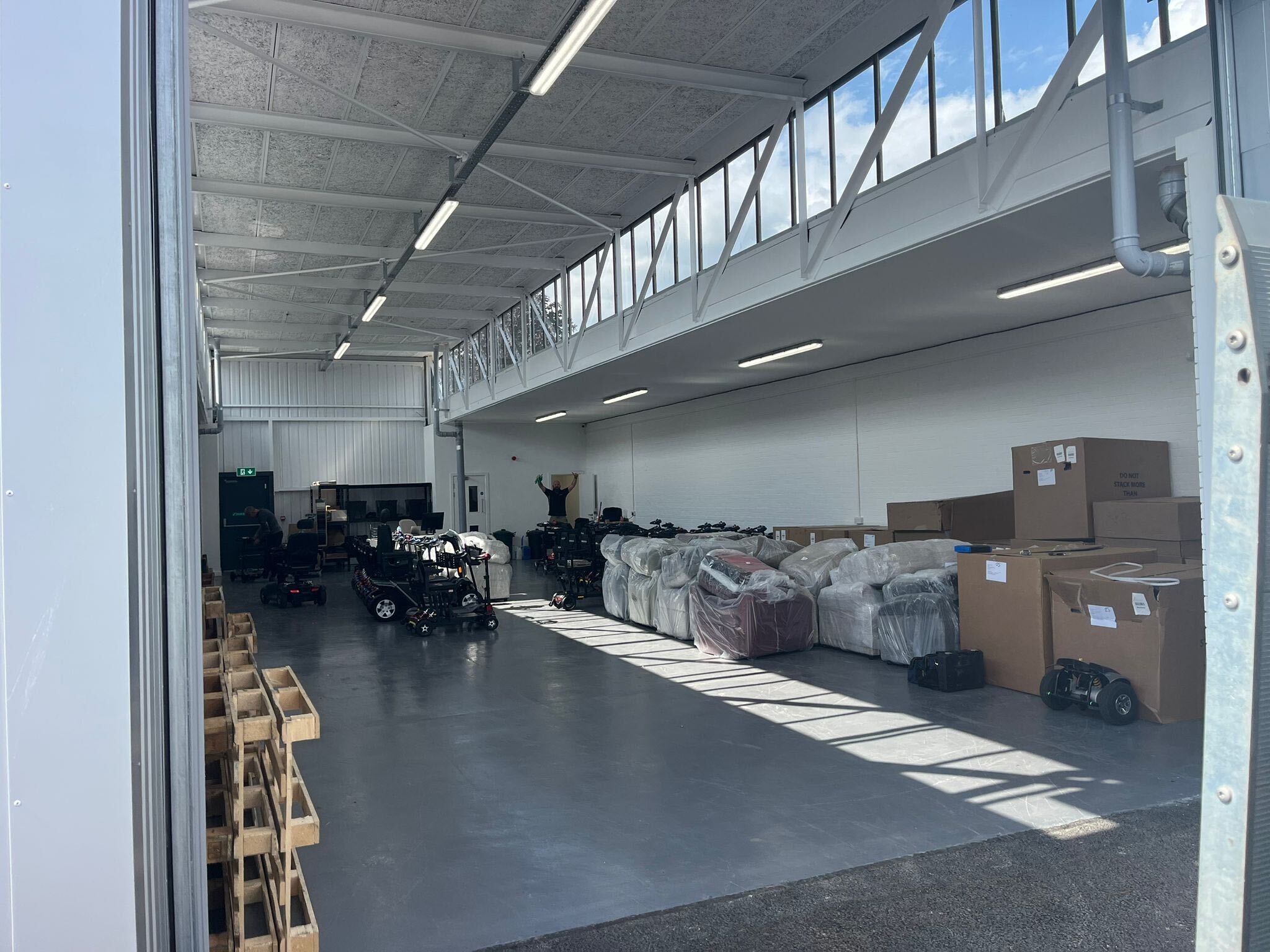
Taking responsibility for the customer experience also means managing the stock that supports it. The two product lines move through the warehouse in different ways. Scooters come in by the container and stay on the racks until they’re sold. Each chair, on the other hand, is made for a specific customer and goes out right away with the delivery team.
Orders start with a deposit, and the team needs to know which stock is already promised to a customer and which is available to sell. When the business was small, a spreadsheet was enough to keep track. But as more containers arrived and they moved into a bigger warehouse, keeping track became harder.


The challenge: stock in spreadsheets and margins nobody could explain
Growth came fast, and the back office didn’t keep up. Ben’s background is marketing and his business partner’s is sales, so the front end was well set up from day one with HubSpot‘s native integration, Slack and Xero‘s direct integration. Stock lived in Google Sheets.
At first that was enough. A customer paid a deposit and the team ordered that customer’s scooter. Soon it made more sense to order 10 at a time, then 20, then whole containers. They moved from a small unit into a large warehouse with racking, and the sheets couldn’t keep up. Stock came in and went out without always being logged, and at the time nobody had a way to do it.
We were going for about 18 months flying blind.
Ben Kenny, Founder and Managing Director, Muick Sandy
Cost of goods depended on stock counts at the start and end of each month, and the counts weren’t reliable, so margins jumped around in ways nobody could explain. “One month the margin was 50% more than the previous month,” Ben says.
Fixing stock became the top priority, especially with a second distribution hub on the way. They wanted one system that knew what sat where before they opened it.
Why Katana: an open API to build on
Muick Sandy sat through demos and ran trial accounts with several systems. Ben likes the development side of things, so he tested each one on how well it would connect to the tools the business already ran on. Katana’s API and its Make integration both worked the way he needed.
It was the API of Katana. How well documented it was, how well it worked.
Ben Kenny, Founder and Managing Director, Muick Sandy
Ben had already been exploring Katana on the trial version, so going live was quick. From there, Katana’s team ran onboarding sessions to set the account up around how Muick Sandy works, from deposit-led orders to chairs built for one customer, which gave Ben a solid base to build his own automations on.
One stock record across 10 locations
Katana now holds Muick Sandy’s stock across all 10 of its locations, including the second distribution hub. Scooters arrive by the container and sit on the racking, so the team can see how many are left and when to order the next one. Chairs come in from the factory for one customer and go straight back out with a delivery team. Both run through the same record, and every stock movement is logged.
Personalized automations built on Katana
Ben took the setup further and shaped Katana around the business himself. Using Katana’s API, webhooks and Make, he connected it to the rest of their tools. Katana’s native HubSpot and Xero integrations covered the basics, with stock and order data flowing to Xero and month-end figures coming from the same record. For HubSpot, Muick Sandy wanted more control over which orders go where and which details come along, and Ben built those flows on top.
Built by Muick Sandy on Katana
Sales orders from the field
When a sales rep submits an order after a home visit, it goes into Katana and HubSpot automatically.
Order details from HubSpot
Details the team enters in HubSpot fill in the matching fields in Katana, so nobody types them twice.
Deliveries closed from HubSpot
When an order moves to delivered in HubSpot, its sales order in Katana is marked as delivered.
Purchase orders received from the delivery note
Incoming stock is received in Katana automatically, based on the supplier’s delivery note.
Shipping labels
Shipping labels are created automatically through Shiptheory.
Returns matched to the right product
Each product on a Katana sales order is linked to the same product on the HubSpot deal, so when something comes back, the team knows exactly which item it was.
Alerts in Slack
The team gets a Slack message when stock runs low at any depot, or when a workflow doesn’t run as expected.
Ben Kenny, Founder and Managing Director, Muick SandyWe have hundreds and hundreds of automations running.
Running Katana through AI with Katana MCP
The automations aren’t the only way Muick Sandy has made Katana their own. They also connect Claude to Katana through Katana MCP, and it’s quickly become one of the main ways the team works in Katana. They use it to check how accurate their stock is and to spot gaps in their processes.
They also ask it which parts get used most, which helps them decide what to order, and Muick Sandy uses it to help build new workflows.
Ben Kenny, Founder and Managing Director, Muick SandyWith items that move in and out quite frequently, it’s much easier to use AI than to look through each movement and identify what went wrong and when.
Results
Steady month-end numbers
With every location on one stock record, the team knows what’s in each warehouse and when to reorder, and month-end numbers are far steadier than when cost of goods came from a spreadsheet.
- Steadier margins. Margins that used to swing by as much as 50% from one month to the next now move by about 3%.
- Shorter waits for customers. The team can see stock levels in black and white, and their automations warn them before stock runs low, so they rarely run out. On stocked items, lead time to customers has dropped from 3 to 5 weeks to 7 to 10 working days.
- A small team keeping up with growth. The 1,500+ automations a day move information between sales, stock, the team and the accounts without anyone copying it across, so a business that started with five people has kept up with its own growth.
In real terms, it’s worth way more than what we pay for it.
Ben Kenny, Founder and Managing Director, Muick Sandy
What’s next
Ben keeps adding to what runs on Katana. Next on his list:
- Print delivery notes automatically, so the warehouse knows which driver each order is for
- Do more with the Katana Admin Tool, a Chrome extension he uses alongside Katana:
- pull the next purchase order number for each supplier, since every supplier has its own numbering
- see who edited a sales or purchase order
- list everything on order, grouped by supplier
- Use Katana to help plan imports
- Link HubSpot deals to sales orders in Katana
Every automation Ben adds shapes Katana a little more around how Muick Sandy runs, and makes it a little more their own.
There’s a lot happening behind the scenes in Operations, and Katana plays a key role in keeping everything organised. Whether we’re receiving deliveries, moving stock between warehouses or checking availability, it’s become part of how we work every day.
Beth Cowley, National Warehousing and Inventory Manager, Muick Sandy
More case studies








How Shoreline Manufacturing swapped its ERP and $80,000 in manual workarounds with a custom system
Shoreline Manufacturing got a Katana system built around how its shop runs. Material is now ordered within minutes of a work order.










Get visibility over your sales and stock
Wave goodbye to uncertainty with Katana Cloud Inventory — AI-powered for total inventory control
