
Get ready for buyers using AI to find and purchase products
It’s official: shopping is moving into AI tools.
The next few months will reward the brands that get set up early. The first step to get ahead and stay visible in AI recommendations is tightening the basics behind inventory and availability. Here’s how.
Your guide to selling through AI assistants
Agentic commerce adds a new buying path on top of your existing channels. This page guides product teams who want to understand agentic commerce and get ready early without rebuilding their stack.
- How agentic commerce works
- Where to focus first
- Quick stack check
Understanding agentic commerce
AI-assisted shopping: the new sales channel
Agentic commerce is here: people are shopping inside AI tools they already use for work and search. Chat-style assistants and AI search experiences now go beyond recommending products and carry the buyer into checkout using your product and availability data. Buyers stay in one flow and make decisions faster, with less browsing. And brands start competing in a new shelf space: the recommendation itself.
To get that space, you need a single source of truth for inventory. AI tools tend to skip listings that look uncertain on stock, even when the product is a great match. Keep inventory and availability dependable, and you give these tools a reason to surface your products more often – and get your SMB brand in front of high-intent shoppers without a big-player budget.

How does agentic commerce work?
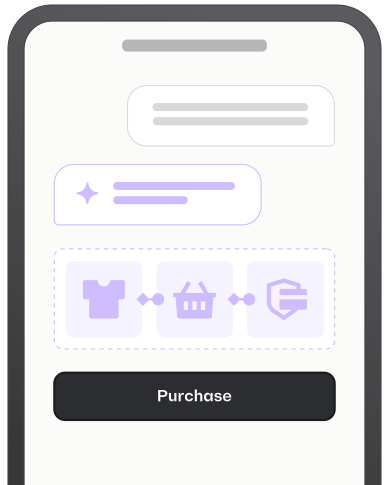
Agentic commerce uses AI agents to shop on a buyer’s intent.
In practice, it looks like:
- The user writes down what they want: a facial moisturizer for combination skin
- The agent searches across retailers, compares options, and brings back a best match based on what it can learn
- The buyer confirms their choice and the agent carries out checkout steps using stored payment info
Where to focus
The setup that makes AI shopping work
Agentic commerce is growing fast, and basic inventory gaps can cost you visibility once buying moves into these tools. These are the four essential steps to build a foundation that supports AI discoverability and faster buying.


Set sellable inventory rules
Decide what your business can sell right now, then keep that logic consistent across selling channels. In AI-assisted shopping, oversells and cancellations teach the system and can lower how often your products get surfaced. Availability needs to reflect real sellable inventory at checkout. Document how you treat open orders and holds, then use the same rule during demand spikes. This is the quickest way to stop overselling and keep recommendations aligned with what you can fulfill.
- Separate on-hand from sellable stock
- Subtract open orders and holds from what you show as available
- Set clear rules for preorders and backorders

Get multi-location stock accuracy
AI-assisted shopping pulls from whatever stock picture it can see. Multi-location setups make that harder, because totals can look fine even as specific locations fall out of sync. Transfers and receiving are the usual trouble spots. Location-level consistency keeps availability believable and reduces the chance of selling the same unit twice.
- Track stock by location (warehouse, 3PL, FBA)
- Record receipts and transfers to the right location
- Separate “at this location” from “on the way to this location”


Track stock live and reorder on time
AI-assisted shopping can push demand into a short window, and low stock gets exposed quickly. Keep inventory updating live as orders and receipts hit. Add low-stock alerts on the SKUs that drive most of your volume, then use a simple forecast tied to lead time to decide what to reorder next.
- Keep stock updating live
- Set low-stock alerts or reorder points
- Forecast demand for top SKUs

Trace every fulfillment handoff
AI-assisted shopping speeds up buying, and it also speeds up the consequences of broken handoffs. Every order needs a clean path into your warehouse or partner, and every inventory move needs a clear source tied to a real event. Clear movement records cut disputes with partners and reduce end-of-month reconciliation issues.
- Tie each stock change to a source event
- Keep shipment and cancellation statuses current across channels
- Review exceptions weekly and fix the broken step
Get the data behind AI-assisted shopping
Learn how AI is changing buyer behavior, from discovery to checkout. This guide explains agentic commerce, why it matters, and how to prepare your brand with a practical readiness checklist.
Checklist
What AI shopping tools need from your stack
AI-assisted shopping makes your operations critical to being recommended. Real-time inventory gaps can reduce how often your products get surfaced. Use the checks below to see what your setup can support today, and where you may need stronger tooling or clearer ownership before this channel sends more orders your way.
Can a tool confirm “buyable now”?
Sellable rules match what you can ship through your inventory system.
Can it tell where the item ships from?
Location data holds up at pick time through your warehouse and fulfillment partner records.
Can it protect fast movers across channels?
Caps and reserves prevent channel conflicts through the rules you use to split stock between storefront and marketplaces.
Can the order land with clean fulfillment details?
Item and shipping info arrive intact through your storefront order data and the handoff into your 3PL workflow.
Can your team trace a stock change quickly?
Every move ties back to a real event through an inventory history log tied to orders and receipts.
Can you spot drift before it hits customers?
Exceptions get reviewed on a steady cadence through a short weekly check across stock, orders, and fulfillment status.
Katana Cloud Inventory
Turn AI shopping interest into shipped orders
Now is the right time to claim a spot in AI recommendations. Early days reward brands that are ready to fulfill and for SMBs, the first step is real-time inventory accuracy.
Keep availability dependable over time to stay discoverable and grow sales. Katana acts as the inventory truth layer behind that availability, with multi-location inventory control and traceable stock movements. Easily connect to the rest of your stack through apps and implementation partners.