How to improve inventory accuracy
Most businesses operate with 5-10% inventory , costing thousands in stockouts, overstock, and fulfillment errors. Here’s the practical playbook to reach 99%+ accuracy, based on what’s worked for real teams across ecommerce, wholesale, and manufacturing.














Why inventory accuracy matters for manufacturers
To improve inventory accuracy, start by auditing your current accuracy rate, then address root causes: manual data entry errors, unrecorded stock movements, and sync delays between sales channels and stock records. Implement cycle counting, deploy barcode scanning at every touch point, and adopt real-time inventory software to eliminate the gap between physical stock and system records. Businesses using these methods routinely achieve 99%+ accuracy by dollar value.
Why inventory accuracy matters
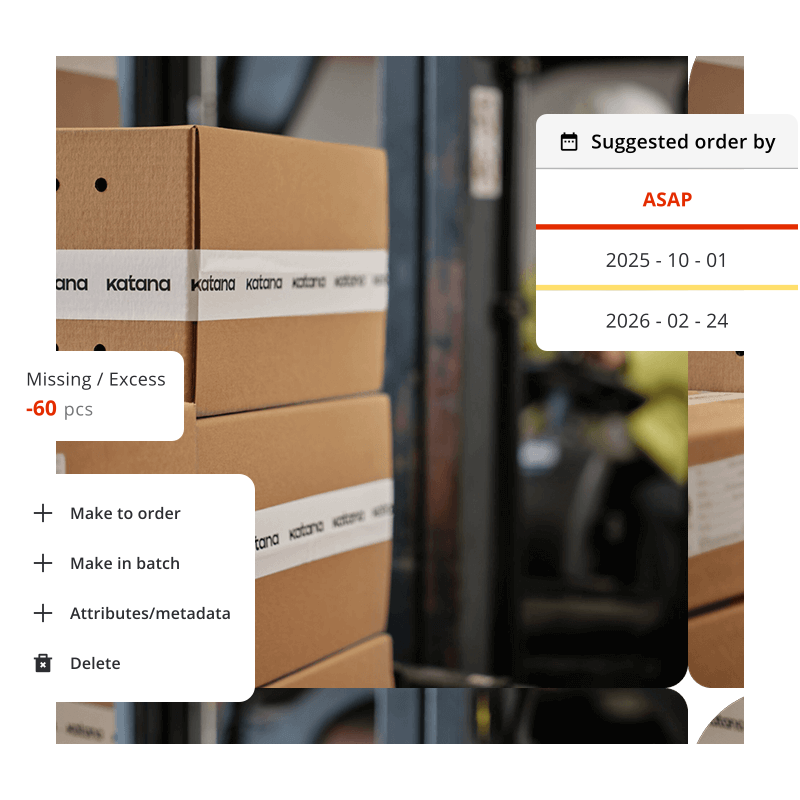
When your system says you have 500 units but you actually have 430, the consequences cascade: orders can’t be fulfilled, rush orders to suppliers cost 2-3x normal pricing, customers get late shipments, and your team spends hours investigating instead of selling.
The hidden cost isn’t just the discrepancy itself. It’s the chain reaction. One inaccurate count triggers emergency purchases, order rescheduling, overtime labor, and customer apologies.
Root causes of inventory inaccuracy
Before fixing the problem, you need to diagnose it. These are the six most common causes we see across manufacturing teams:
- Manual data entry: Spreadsheet typos, forgotten updates, duplicate entries
- Production scrap: Waste and defects not deducted from raw material counts
- Receiving errors: Shipments logged without physically verifying quantities
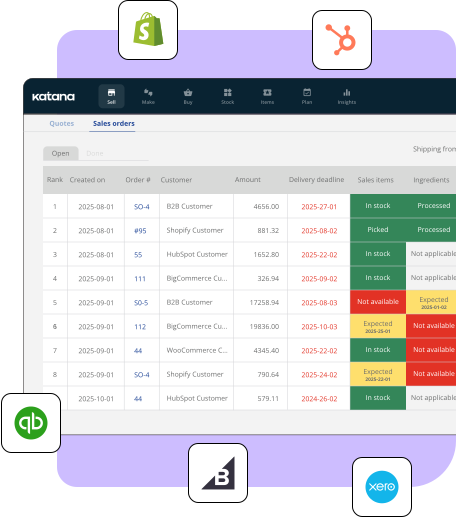
- Channel sync delays: Shopify or Amazon sales not reflected in your stock system for hours
- Informal transfers: Team members grab materials without documenting the movement
- Annual-only counting: Errors accumulate for 12 months before anyone catches them
6 steps to 99%+ inventory accuracy
STEP 1
Audit your current accuracy rate
Select 50-100 SKUs across categories (raw materials, components, finished goods). Physically count them and compare to your system. Calculate: (correct records / total records) × 100. This baseline tells you how severe the problem is and which item categories have the worst accuracy.
STEP 2
Identify where discrepancies originate
For each inaccurate SKU, trace the error backward. Was it a receiving mistake? A production run that consumed more than the BOM specified? A sale that didn’t sync? Categorize errors by source — you’ll typically find 80% of discrepancies come from 2-3 root causes.
STEP 3
Implement daily cycle counting
Replace your annual full inventory count with daily cycle counts of 5-10% of SKUs. Count high-value and high-velocity items weekly, low-velocity items monthly. This spreads the workload and catches errors within days instead of months.
STEP 4
Deploy barcode scanning at every touch point
Every time an item is received, moved, consumed in production, or shipped — scan it. This eliminates manual entry errors and creates a time-stamped audit trail. Most manufacturers see accuracy improve 10-15 percentage points from scanning alone.
STEP 5
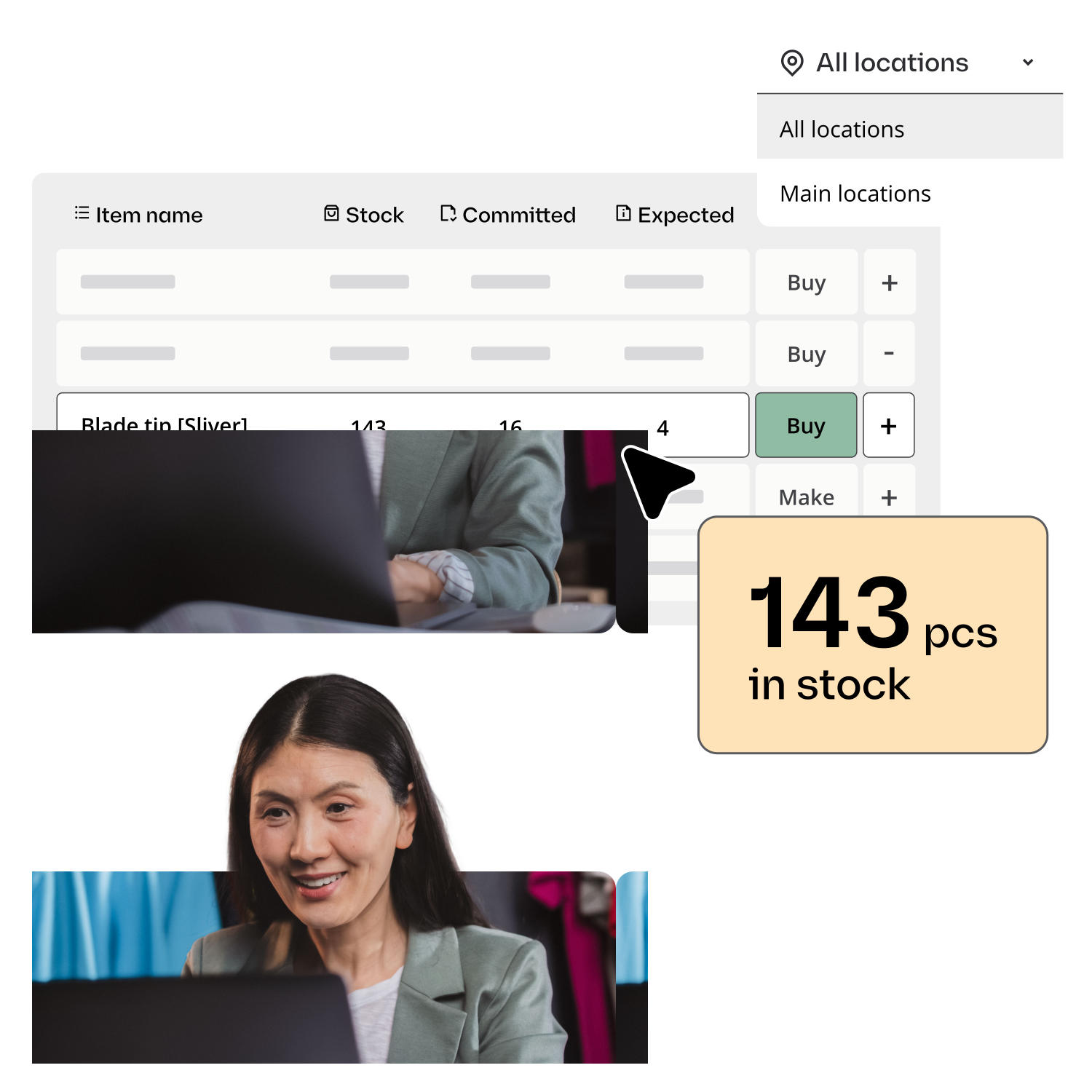
Adopt real-time inventory management software
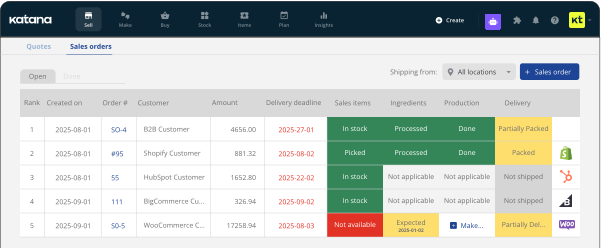
Replace spreadsheets with software that updates stock automatically. When a Shopify order comes in, stock deducts instantly. When a production order completes, raw materials are consumed and finished goods are added — automatically, using your bills of materials.
STEP 6
Standardize your warehouse processes
Document procedures for receiving, put-away, picking, transfers, and shipping. Train every team member. The most common source of discrepancy isn’t software — it’s someone grabbing materials without scanning or logging the movement.
“99.18% accuracy by dollar value — we couldn’t have done it without Katana.”
— Food manufacturer, $730K average inventory value
Food manufacturer went from 5-10% discrepancies to 99.18% accuracy with Katana
By combining Katana’s real-time tracking with barcode scanning and cycle counting, they achieved 99.18% inventory accuracy by dollar value — across $730K of average inventory. No more dead stock, no more emergency orders.
How to calculate inventory accuracy
The inventory accuracy formula is: (Number of correct stock records / Total stock records counted) × 100 = Accuracy %. For dollar-value accuracy, replace counts with values: (Dollar value of correct records / Total dollar value counted) × 100. World-class manufacturers target 99%+ by dollar value. Most operate between 85-95% without dedicated inventory software.
Accuracy Level
What it means
Business impact
Below 85%
Systemic process failure
Constant stockouts, emergency orders, production delays
85-95%
Typical for spreadsheet-managed operations
Regular discrepancies, weekly fire-fighting
95-98%
Good — processes are working
Occasional issues, manageable
99%+
World-class — software + process alignment
Smooth operations, reliable forecasting
Explore Katana’s inventory capabilities
Frequently asked questions
World-class manufacturers target 99%+ inventory accuracy by dollar value. Most small to mid-sized manufacturers operate between 85-95% accuracy. Below 90% typically indicates systemic process issues that need immediate attention.
Inventory accuracy rate = (number of correct stock records / total stock records counted) × 100. For dollar-value accuracy: (value of correct records / total value of records counted) × 100. Count a representative sample, compare physical counts to system records, and calculate the percentage.
The most common causes are: manual data entry errors in spreadsheets, production scrap or waste not being recorded, receiving mistakes (wrong quantities logged), delayed sync between sales channels and inventory systems, and informal stock transfers between locations without documentation.
Ready to stop guessing and start counting accurately?
Katana’s real-time tracking, barcode scanning, and automated BOM deductions help manufacturers achieve 99%+ accuracy. Start free — no credit card required.