
The cost of invisible stock in the AI era
How AI shopping turns temporary stockouts into permanent lost visibility, and what it costs as you grow. With original data from 375 product brands:
- ~$21,000 — what the typical brand loses a year to stockouts on its best sellers
- 59% — of stockouts hit a product that had already run out earlier that year
- 393% — year-over-year growth in AI shopping traffic to US retailers (Adobe, 2026)
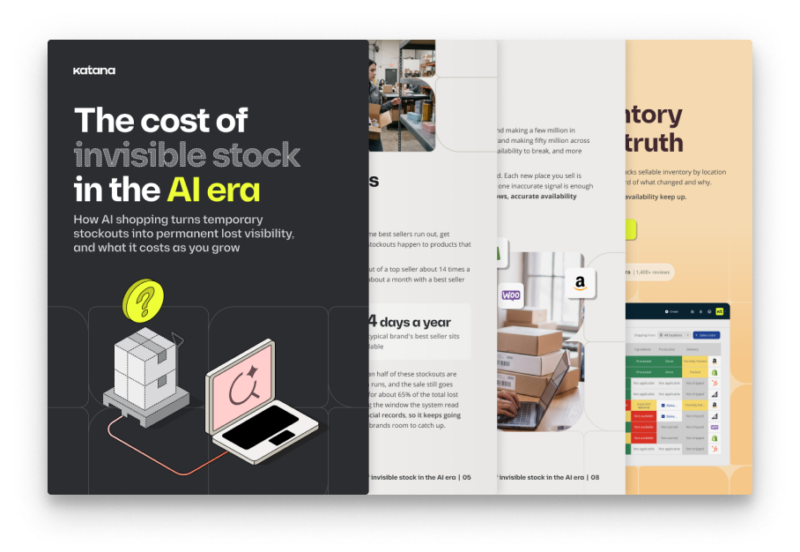
Download the report
In this playbook you’ll find:
- What stockouts cost product brands, measured across a year of data from 375 real businesses
- Why the same best sellers keep running out, and the pattern most brands never spot in their own numbers
- How the cost changes once buyers shop through AI, and why it gets harder to recover from
- What the least-exposed brands do to stay in stock and stay visible
Read the report
Do you know how much stockouts cost your business?
Your best-selling product runs out, and you restock in a day or two. No harm done, or so it looks.
Stockouts on a brand’s best sellers cost the typical product business about $21,000 a year. We measured this across 375 brands selling on Shopify, Amazon, and other sales channels, over twelve months. The hardest-hit 10% lost more than ten times that.
Most brands never see the full number. It shows up a few days at a time, across the year, and reads as the cost of doing business.
~$21,000
what the typical brand loses each year to stockouts on its best sellers
That cost is about to grow. Shopping is moving into AI tools, and quickly: traffic from AI tools to US retailers grew 393% year over year in early 2026 (Adobe Analytics). Instead of browsing a store, buyers ask ChatGPT or Google for what they want, and the tool returns a short list of products that fit and are ready to buy. In agentic buying, there is no shelf to browse or a prompt to consider something similar. A product the tool reads as unavailable is a product the shopper never sees.
393%
YoY growth in traffic from AI tools to US retailers in 2026
Stockouts have always cost more than the lost sale. Retail research has shown for years that when shoppers find a product out of stock, they often buy something else or shop somewhere else. The brand loses the order, and sometimes the buyer for good.
With AI shopping, the stockout a brand used to absorb in a day or two now decides whether it shows up at all.
What stockouts cost today
Before any AI shopping question, this is what stockouts already cost product brands under the way retail works today.
Across 375 brands over twelve months, the typical brand lost an estimated $21,000 a year to stockouts on their top products. But that number alone undersells the problem, because the impact is uneven. Most brands lost a reasonable amount, but a smaller group lost much more. The top 25% lost around $82,900 each, and the hardest-hit 10% over $268,000.
Annual stockout loss per brand
Median
~$21,000
Top 25%
~$82,900
Top 10%
$268,000+
69%
of all stockout losses fall on just the top 10% of brands
To measure this, we took how fast a product was selling before it ran out, and calculated what it likely would have sold during the days it was unavailable. Across all 375 brands, those lost sales added up to an estimated $27.5 million for the year. The figure excludes seasonal products meant to sell out.
The main reason for the gap is size. Larger brands lose more because they sell higher volumes of their best sellers, so when one runs out there’s more money flowing through it to lose. A two-day stockout might not affect a small brand much, but it can cost a large brand thousands. It’s why the losses pile up at the top: the top 10% of brands account for over two-thirds of everything we measured, and the top 25% cover almost all of it.
What it looks like up close
A beauty brand
~$270,000 a year
Beauty brands rely on hero products: a few best sellers make up most of the revenue. When one of these goes out of stock, there is no long tail to make up for the loss, which is how a stockout problem concentrated in a few SKUs reaches a number this size.
A food and beverage brand
~$82,000 a year
Food and beverage brands depend on repeat purchases and freshness. When a product is out of stock, it interrupts the habit of reordering that keeps these brands going. Even short gaps for popular items can add up over a year.
An apparel brand
~$16,000 a year
Apparel brands spread demand across different sizes and colors, so a shopper who can’t get one variant often takes another, and each stockout costs less. The losses are smaller for each event but happen across many products, which is closer to what a typical brand sees.
The same products keep running out
Stockouts aren’t spread evenly across a catalog. The same best sellers run out, get restocked, and then run out again. Well over half of all stockouts happen to products that already went out of stock earlier in the year.
And it happens all the time. On average, a brand runs out of a top seller about 14 times a year, each time for around two days, which adds up to about a month with a best seller unavailable.
59%
of stockouts hit a product that had already run out earlier that year
~34 days a year
that a typical brand’s best seller sits unavailable
Most of the time, this damage goes unnoticed. More than half of these stockouts are fixed within a day, from backorders or quick production runs, and the sale still goes through. Even so, these recoverable stockouts account for about 65% of the total lost sales, on products the brand could have supplied during the window the system read them as unavailable. The loss never shows in the financial records, so it keeps going unmanaged. This only works as long as shopping gives brands room to catch up.
What changes when buyers shop through AI
As more shopping moves into AI tools, the recovery window that has kept stockout costs hidden starts to shrink.
This move is already happening, and the buyers it brings are especially valuable. Traffic from AI tools converts about 42% better than traditional search, so they are closer to making a decision and more valuable when you reach them (Adobe Analytics, 2026).
This channel is expected to keep growing. By 2030, analysts project AI-driven shopping could make up about 10%-20% of all US e-commerce (Morgan Stanley).
+42%
Better conversion in AI shopping traffic vs traditional search (Adobe, 2026)
Stockouts work differently with AI tools. In a store or on your website, a shopper who hits an out-of-stock product can pick something similar or come back in a day or two. With AI tools, buyers describe what they want, and the tool only shows products that match and are available to buy right then. If your product reads as unavailable, it doesn’t make the list, and the shopper won’t even know it was an option.
The tool weighs availability as it decides what to surface. If a product’s stock can’t be confirmed, it’s less likely to be shown to buyers. For example, Google’s Shopping Graph now has over 50 billion product listings and updates more than two billion every hour to make sure shoppers get up-to-date information. Google already removes listings from Shopping if the stock status in a brand’s feed doesn’t match what’s on the site.
This changes the cost of a stockout. Today, a brand might ship a backorder a day late and still keep most of the sale. With AI shopping, even one day of being out of stock can send the sale to whichever competitor was in stock when the buyer asked. What once cost a delay now costs a customer who went elsewhere without ever seeing you.
What the least-exposed brands do differently
No brand prevents every stockout. What separates the least-exposed ones is a single, accurate view of their stock, one place that knows what’s available and where, kept current enough for AI tools to rely on. The patterns in the data point to three places that matter most.
Why this grows with you
The cost of getting it wrong goes up with volume. A brand making a few million in revenue can absorb the occasional missed day, but a brand making fifty million across more channels and locations has far more places for availability to break, and more money at risk.
Not only that, the risk climbs with every channel you add. Each new place you sell is another place your stock count can fall out of sync, and one inaccurate signal is enough to drop you from a buyer’s options.
What this means going forward
All of it rests on one question a brand can’t answer with marketing: when an AI tool checks whether your product is available, is the answer right?
That check works differently from how brands are used to being found. These tools read your availability fresh each time, before every recommendation, and they read it the same way whether the buyer is in ChatGPT, Google, or Copilot. The only number that matters is the one in the feed the AI sees. If your Shopify admin shows stock but your feed is outdated, it’ll cost you the sale.
That’s why availability is different from design, copy, or ad spend. Those work one surface at a time; an accurate, current view of your stock works on all of them, because every AI tool asks the same question, including the ones that haven’t launched yet. Get it right once and it pays off across the whole channel.
The cost in this report is what brands lose today, while a slow stock update still gets forgiven. With buyers moving to AI tools, that forgiveness is going away. The brands that can give a straight answer on what’s in stock are the ones that stay visible — and buyable.
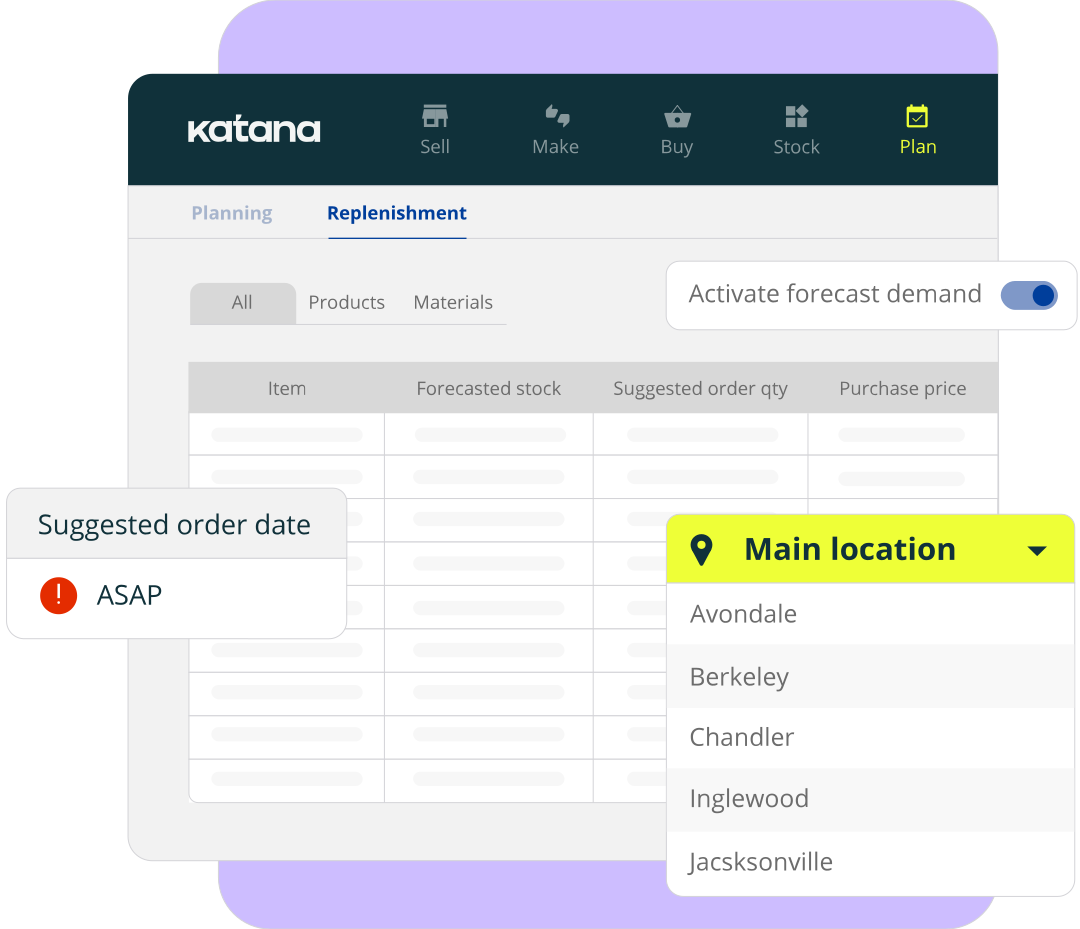
Katana Cloud Inventory
One inventory record across every channel you sell on
Keep the right products in stock, every time. Katana forecasts demand and keeps one live inventory record across Shopify, Amazon, wholesale and more.